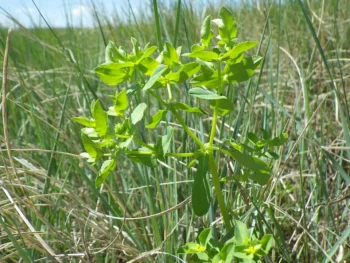
Warty Spurge: A Humble Native with Big Potential
If you’re looking for a low-maintenance native plant that won’t steal the show but will quietly do its job in your garden, meet warty spurge (Euphorbia spathulata). This unassuming little plant might not win any beauty contests, but it’s got character and some serious staying power that makes it worth considering for the right garden situation.
What is Warty Spurge?
Warty spurge is a native North American forb – basically a non-woody herbaceous plant that can live as either an annual or perennial depending on growing conditions. Don’t let the rather unflattering common name fool you; while it may not be the most glamorous plant in your garden, it’s a honest, hardworking native that has been quietly thriving across the continent for ages.
This plant goes by quite a few scientific aliases (botanists love their synonyms!), including former names like Euphorbia arkansana and Euphorbia obtusata, but Euphorbia spathulata is the name that stuck.
Where Does Warty Spurge Call Home?
Talk about a well-traveled native! Warty spurge has one of the most impressive natural ranges you’ll find, spanning from Canada all the way down through 39 U.S. states. You can find it naturally growing everywhere from Alabama to Wyoming, and from Florida to Washington state. This incredibly wide distribution tells us something important: this plant is seriously adaptable.
- Species observed
- No observations
A Word of Caution: Rarity Considerations
Here’s something important to know: while warty spurge is widespread overall, it’s actually considered rare in some areas. In Arkansas woodlands, it has an S1 rarity status, meaning it’s critically imperiled in that specific habitat. If you’re interested in growing this plant, please make sure you source it from reputable native plant nurseries that propagate their own stock rather than wild-collecting.
What Does Warty Spurge Look Like?
Let’s be honest – warty spurge isn’t going to make anyone stop and gasp at its beauty. It produces small, yellowish-green flowers that are pretty modest in the looks department. But sometimes the best garden plants are the ones that provide structure and fill space without demanding all the attention. Think of it as the reliable supporting actor in your garden’s cast of characters.
Garden Role and Landscape Uses
Warty spurge shines in:
- Native plant gardens where you want authentic local flora
- Prairie and meadow restorations
- Naturalized areas where you want low-maintenance ground cover
- Areas where you need plants that can handle varied conditions
It’s not the plant for formal flower borders or showcase beds, but it’s perfect for those spots where you want something native, low-key, and reliable.
Growing Conditions and Care
Here’s where warty spurge really proves its worth – it’s remarkably unfussy. Based on its wetland status across different regions, it’s quite flexible about moisture levels, usually preferring drier sites but able to handle some wetness too.
Ideal conditions include:
- Full sun to partial shade
- Well-draining soil (though it’s adaptable to various soil types)
- USDA hardiness zones 3-9
- Drought tolerance once established
Planting and Care Tips
The good news? Warty spurge is pretty much a plant it and forget it kind of native. It’s low-maintenance and tends to self-seed, which can be great for naturalizing but might require some management if you don’t want it spreading too enthusiastically.
Care basics:
- Water during establishment, then let nature take over
- No special fertilizer needed
- May self-seed readily – decide if this is a feature or something to manage
- Little to no pest or disease problems
Wildlife and Pollinator Benefits
While warty spurge’s flowers might look unremarkable to us, they do provide nectar for small pollinators like flies and tiny bees. It’s not a major pollinator magnet, but every little bit helps in creating a complete ecosystem in your garden.
Should You Grow Warty Spurge?
Consider warty spurge if you:
- Want authentic native plants for your region
- Need low-maintenance ground cover
- Are working on prairie or meadow restoration
- Appreciate plants that are more about function than flashy looks
Skip it if you:
- Want showy flowers for ornamental displays
- Prefer plants that won’t self-seed
- Are looking for major pollinator attractors
Warty spurge might not be the star of your garden, but it’s the kind of reliable native that helps create authentic, low-maintenance landscapes. Just remember to source it responsibly, especially given its rarity in some areas. Sometimes the most valuable plants are the humble ones that simply do their job well, year after year.