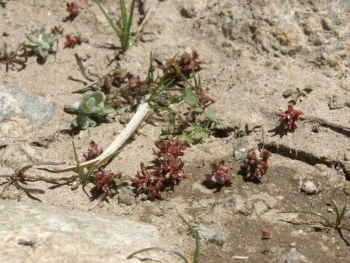
Water Pygmyweed: A Tiny Native Gem for Wetland Gardens
Meet water pygmyweed (Crassula aquatica), one of North America’s most unassuming yet fascinating native plants. Don’t let its diminutive size fool you – this little annual herb packs a surprising punch when it comes to wetland gardening and ecological restoration.
What Exactly is Water Pygmyweed?
Water pygmyweed is a small annual forb that belongs to the stonecrop family. Unlike its more famous succulent cousins, this tiny plant has adapted to life in consistently wet environments. You might also see it listed under several scientific synonyms, including Tillaea aquatica, Bulliarda aquatica, or Tillaeastrum aquaticum – botanists have been shuffling this little guy around for years!
As a forb, water pygmyweed lacks any significant woody tissue and completes its entire life cycle in a single growing season. Think of it as nature’s version of a temporary tenant that shows up, does its job, and leaves seeds for next year’s generation.
Where Does Water Pygmyweed Call Home?
This remarkable little plant is a true North American native with an impressively wide distribution. You can find water pygmyweed naturally occurring across an enormous range, from the frigid territories of Alaska and Canada’s northern provinces all the way south to states like Alabama, Texas, and Louisiana. It grows in states and provinces including:
- Alaska, British Columbia, Alberta, Saskatchewan, Manitoba, Ontario, Quebec, and the Maritime provinces
- Most U.S. states from coast to coast, including California, Washington, Oregon, Arizona, New Mexico, Texas, Minnesota, Maine, and many others
- Even reaches as far as St. Pierre and Miquelon
- Species observed
- No observations
A Plant That Lives by Water
Here’s where water pygmyweed gets really interesting – it’s classified as an obligate wetland plant across all regions of North America. This means it almost always occurs in wetlands and requires consistently moist to wet soil conditions to thrive. Whether you’re in the arid Southwest or the humid Southeast, this plant demands water, water, and more water.
In Arkansas, water pygmyweed has a rarity status of S1S3, meaning it’s quite uncommon in that state. If you’re lucky enough to spot it in areas where it’s rare, consider yourself privileged to witness this botanical treasure!
Should You Grow Water Pygmyweed?
The honest answer? Only if you have the right conditions and realistic expectations. Water pygmyweed isn’t going to win any beauty contests – its flowers are tiny and inconspicuous, and the plant itself rarely grows more than a few inches tall. But here’s why you might want to consider it:
- Authentic native appeal: It’s genuinely native across most of North America
- Wetland restoration: Perfect for naturalized bog gardens, rain gardens, or pond edges
- Low maintenance: Once established in proper conditions, it largely takes care of itself
- Ecological value: Contributes to native plant communities and wetland ecosystems
Growing Water Pygmyweed Successfully
If you’re intrigued and have a suitable wet spot in your garden, here’s how to make water pygmyweed happy:
Hardiness: Water pygmyweed is cold-hardy and can likely grow in USDA zones 3-9, given its natural range from Alaska to the Gulf Coast.
Soil and Water Requirements: This is non-negotiable – water pygmyweed needs consistently moist to wet soil. Think bog conditions, pond margins, or areas that stay soggy most of the year. Regular garden soil, even if kept well-watered, probably won’t cut it.
Light Conditions: Full sun to partial shade works best, though it can tolerate various light conditions as long as moisture needs are met.
Planting: As an annual, water pygmyweed grows from seed each year. If you can source responsibly collected seeds (especially important in areas where it’s rare), scatter them in your designated wet area in late fall or early spring.
Managing Expectations
Let’s be clear about what you’re signing up for. Water pygmyweed is a specialist plant for specialist gardens. It’s not going to provide dramatic color or impressive size. Instead, it offers authenticity, ecological contribution, and the quiet satisfaction of growing something truly native to your region.
This plant is perfect for naturalized wetland areas, rain gardens, or the soggy spots in your yard where other plants struggle. It’s also an excellent choice for ecological restoration projects or native plant gardens focused on local flora rather than showy displays.
The Bottom Line
Water pygmyweed won’t be every gardener’s cup of tea, but for those creating authentic wetland habitats or simply wanting to grow something genuinely native and ecologically meaningful, it’s a worthy addition. Just remember – if you don’t have naturally wet conditions or aren’t prepared to maintain them, this little plant isn’t for you.
For gardeners lucky enough to have the right soggy spot, water pygmyweed offers a chance to grow a piece of North America’s natural heritage right in your backyard. Sometimes the smallest plants carry the biggest stories, and this tiny wetland native certainly has tales to tell.