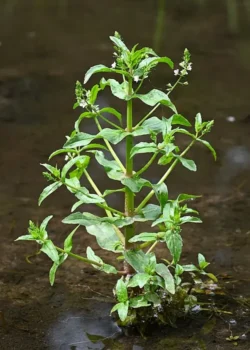
Water Speedwell: A Native Wetland Gem for Your Garden
If you’re looking for a native plant that thrives in wet conditions and supports local ecosystems, water speedwell might just be the perfect addition to your garden. This unassuming yet charming perennial has been quietly decorating North American wetlands for centuries, and it’s ready to bring that same natural beauty to your landscape.
What is Water Speedwell?
Water speedwell (Veronica anagallisaquatica) is a native North American forb that belongs to the plantain family. Don’t let the scientific name intimidate you – this is simply a herbaceous plant without woody stems that comes back year after year. As a biennial or perennial, it establishes itself well and provides consistent beauty in your garden.
This plant goes by quite a few scientific synonyms, which can make identification tricky for botanists, but for gardeners, just remember the distinctive features: small blue to purple flowers arranged in delicate spikes and lance-shaped leaves that give it an elegant, streamlined appearance.
Where Does It Naturally Grow?
Water speedwell is a true North American native, naturally occurring throughout Canada and the lower 48 states. You can find it growing wild from coast to coast, including in states like California, Texas, Maine, and Florida. In Alaska, it’s probably an introduced species, but elsewhere it’s been part of the natural landscape for millennia.
- Species observed
- No observations
A Rare Beauty Worth Protecting
Here’s something important to know: while water speedwell grows across much of North America, it’s actually quite rare in some areas. In New Jersey, for example, it’s listed as endangered and is specially protected in the Pinelands and Highlands regions. If you’re planning to grow this plant, make sure you source it responsibly from reputable native plant nurseries rather than collecting from the wild.
Perfect for Wet Gardens
Water speedwell is what botanists call an obligate wetland plant, which is a fancy way of saying it absolutely loves having wet feet. In fact, it almost always grows in wetlands across all regions of North America. This makes it perfect for:
- Rain gardens that collect stormwater runoff
- Bog gardens or marshy areas
- Pond margins and water features
- Areas with poor drainage that stay consistently moist
- Wetland restoration projects
Growing Water Speedwell Successfully
The key to success with water speedwell is understanding its love for moisture. Here’s what you need to know:
Light Requirements: Water speedwell performs best in full sun to partial shade. It can handle some shade but will produce more flowers with adequate sunlight.
Soil Needs: This plant thrives in consistently moist to wet soils. It can tolerate periodic flooding and actually prefers conditions that would stress out most other garden plants.
Hardiness: Based on its wide distribution, water speedwell is cold-hardy and can likely grow in USDA zones 3-9, making it suitable for most North American gardens.
Care Tips: Once established, this is a remarkably low-maintenance plant. The biggest challenge is ensuring it gets enough water. If you have a naturally wet area in your yard, water speedwell will practically take care of itself.
Garden Design and Aesthetic Appeal
Water speedwell typically grows 1-3 feet tall, creating a nice mid-height element in wetland gardens. Its small blue to purple flowers appear in attractive racemes (flower spikes), providing delicate color and texture. The lance-shaped leaves give it a clean, architectural look that works well in naturalized settings.
This plant works beautifully in cottage-style gardens, native plant gardens, and anywhere you want to create a natural, meadow-like feeling. It’s not flashy, but it has that subtle charm that makes native plants so appealing.
Supporting Local Wildlife
While specific wildlife benefits aren’t well-documented for this particular species, water speedwell’s small flowers likely attract native bees and other beneficial insects. As a native plant, it fits naturally into local food webs and provides habitat that non-native plants simply can’t match.
Should You Plant Water Speedwell?
If you have a wet area in your garden and want to support native biodiversity, water speedwell could be an excellent choice. However, given its rarity in some regions, make sure you:
- Source plants from reputable native plant nurseries
- Never collect from wild populations
- Check local regulations, especially if you’re in areas where it’s listed as endangered
- Consider it for wetland restoration or rain garden projects
Water speedwell may not be the showiest plant in your garden, but it offers something equally valuable: the satisfaction of growing a truly native species that supports local ecosystems while solving the challenge of what to plant in those perpetually wet spots. Sometimes the best garden additions are the ones that work with nature rather than against it.