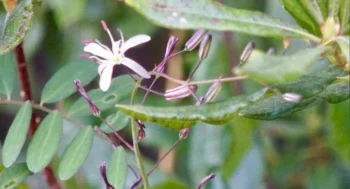
Wavyleaf Soap Plant: A Unique California Native Worth Growing
If you’re looking for a truly distinctive addition to your California native garden, the wavyleaf soap plant (Chlorogalum pomeridianum var. minus) might just be the conversation starter you’ve been seeking. This quirky perennial brings both beauty and ecological value to the right garden setting, though it’s definitely not your typical garden center find.
What Makes Wavyleaf Soap Plant Special?
This fascinating California native is a herbaceous perennial that belongs to the broader soap plant family. What sets the wavyleaf variety apart are its distinctive wavy-edged leaves that form an attractive basal rosette. During its growing season, this plant can surprise you with tall, branching flower spikes that shoot up several feet, adorned with delicate white, star-shaped blooms that open in the evening.
Where Does It Call Home?
Wavyleaf soap plant is exclusively native to California, where it naturally occurs in the coastal ranges and foothills. This makes it a true Golden State specialty – you won’t find this particular variety growing wild anywhere else in the country.
- Species observed
- No observations
A Note About Rarity
Before you rush out to find this plant, there’s something important to know: wavyleaf soap plant has a conservation status that suggests it may be uncommon in the wild. This means if you decide to grow it, you should only source it from reputable native plant nurseries that propagate their stock responsibly rather than collecting from wild populations.
Garden Appeal and Design Role
In the garden, wavyleaf soap plant serves as an excellent architectural accent. Its rosette of wavy leaves provides interesting texture and form during the growing season, while the dramatic flower spikes create vertical interest when they emerge. This plant works beautifully in:
- Native California gardens
- Mediterranean-style landscapes
- Xeriscaped areas
- Wildlife gardens
- Naturalized settings
Growing Conditions and Care
Like many California natives, wavyleaf soap plant has adapted to the state’s Mediterranean climate and prefers:
- Well-draining soil (essential for preventing bulb rot)
- Full sun to partial shade
- Minimal summer water once established
- A natural dormancy period during hot, dry months
This plant is suitable for USDA hardiness zones 8-10, making it perfect for most of California’s diverse climate zones.
Planting and Care Tips
Success with wavyleaf soap plant comes down to understanding its natural rhythm:
- Plant bulbs in fall when cooler weather arrives
- Provide regular water during the winter growing season
- Gradually reduce watering as temperatures warm in late spring
- Allow the plant to go dormant in summer – this is completely normal!
- Avoid overwatering, especially during dormancy
Wildlife and Pollinator Benefits
The evening-opening flowers of wavyleaf soap plant attract a variety of pollinators, including native bees and night-flying moths. By growing this plant, you’re supporting local ecosystems and providing food sources for California’s native wildlife.
Is This Plant Right for Your Garden?
Wavyleaf soap plant is ideal for gardeners who:
- Appreciate unique, native California species
- Want to support local conservation efforts
- Enjoy plants with interesting seasonal changes
- Are comfortable with plants that have dormant periods
- Prefer low-water gardening
However, it might not be the best choice if you prefer plants that look the same year-round or if you tend to overwater your garden.
The Bottom Line
Wavyleaf soap plant offers California gardeners a chance to grow something truly special – a native species that’s both beautiful and ecologically valuable. While it requires a bit of patience and understanding of its natural cycles, the reward is a unique garden specimen that connects you directly to California’s native plant heritage. Just remember to source it responsibly from reputable native plant nurseries to ensure you’re supporting conservation rather than depleting wild populations.