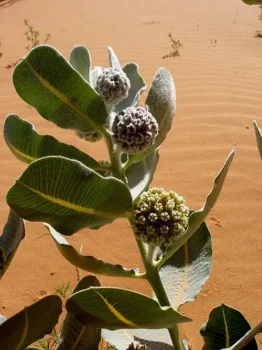
Welsh’s Milkweed: A Rare Desert Gem That Needs Our Protection
If you’re drawn to unique native plants with fascinating stories, Welsh’s milkweed (Asclepias welshii) might catch your attention. But before you start planning where to plant this delicate desert beauty, there’s something important you need to know: this isn’t your typical garden center find.
What Makes Welsh’s Milkweed Special
Welsh’s milkweed is a perennial native plant that calls the American Southwest home. This charming milkweed produces clusters of small, pink to purple flowers that bloom in spring and early summer, creating a lovely display against its narrow leaves. Like its more common milkweed cousins, it belongs to a plant family that’s crucial for supporting pollinators, particularly monarch butterflies.
Where Welsh’s Milkweed Lives
This rare milkweed has a very limited native range, found only in Arizona and Utah. It’s endemic to the Colorado Plateau region, where it grows naturally in sandy desert washes and canyon bottoms.
- Species observed
- No observations
The Conservation Reality Check
Here’s where things get serious: Welsh’s milkweed is federally listed as Threatened and has a Global Conservation Status of S1, meaning it’s critically imperiled. With typically five or fewer populations and very few remaining individuals (less than 1,000), this plant is hanging on by a thread in the wild.
What does this mean for gardeners? While it’s not illegal to grow Welsh’s milkweed, it requires extremely careful consideration and responsible sourcing.
Should You Grow Welsh’s Milkweed?
The honest answer? Probably not, unless you’re a specialized native plant collector or conservation gardener. Here’s why:
- It requires very specific growing conditions that are difficult to replicate
- Seeds or plants must be sourced responsibly to avoid impacting wild populations
- It’s adapted to harsh desert conditions that most gardens can’t provide
- There are many other native milkweeds that are easier to grow and equally beneficial to pollinators
If You’re Determined to Try
For the dedicated conservation gardener willing to take on this challenge, Welsh’s milkweed needs:
- Extremely well-draining, sandy soil
- Full sun exposure
- Minimal water once established
- USDA hardiness zones 6-9
- Protection from winter moisture
Most importantly, only obtain seeds or plants from reputable native plant societies or conservation programs that can guarantee the material wasn’t collected from wild populations.
Better Alternatives for Most Gardens
If you want to support monarchs and other pollinators with milkweeds, consider these more garden-friendly native options:
- Common milkweed (Asclepias speciosa) for larger spaces
- Showy milkweed (Asclepias speciosa) for western gardens
- Butterfly weed (Asclepias tuberosa) for drier conditions
- Swamp milkweed (Asclepias incarnata) for moister soils
The Bigger Picture
Welsh’s milkweed serves as a reminder of how precious and fragile our native plant heritage can be. While most of us won’t grow this particular species, we can all contribute to conservation by choosing appropriate native plants for our regions and supporting organizations working to protect rare species like Welsh’s milkweed.
Sometimes the best way to appreciate a plant is to learn about it, respect its rarity, and focus our gardening efforts on native plants that can thrive in cultivation while still providing valuable habitat for wildlife. That’s a win-win for both gardeners and conservation.