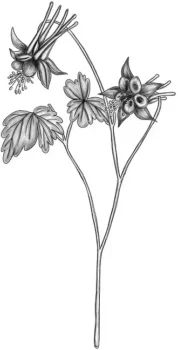
Western Columbine: A Native Gem for Your Shade Garden
If you’re looking to add a touch of woodland magic to your garden, western columbine (Aquilegia formosa) might just be the perfect plant for you. This charming native perennial brings both beauty and ecological benefits to landscapes across western North America, making it a fantastic choice for gardeners who want to support local wildlife while enjoying stunning blooms.
What Makes Western Columbine Special?
Western columbine is a native North American perennial that belongs to the buttercup family. This delightful forb (a non-woody flowering plant) produces some of the most distinctive and eye-catching flowers you’ll find in the plant kingdom. The nodding blooms feature bright red sepals and yellow petals with characteristic long spurs that extend backward from the flower – a design that’s perfectly engineered for its primary pollinators.
The plant grows as a clumping perennial with an erect, multiple-stem growth form, typically reaching about 3 feet in height. Its attractive blue-green compound foliage provides a lovely backdrop for the showy flowers and remains appealing throughout the growing season.
Where Does Western Columbine Grow Naturally?
This hardy native has an impressive natural range, growing wild across Alaska, western Canada, and much of the western United States. You’ll find it naturally occurring in Alberta, British Columbia, Yukon, Alaska, California, Idaho, Montana, Nevada, Oregon, Utah, Washington, and Wyoming. It’s adapted to a variety of climates and elevations, from sea level coastal areas to high mountain meadows.
- Species observed
- No observations
Why Plant Western Columbine in Your Garden?
There are plenty of compelling reasons to welcome western columbine into your landscape:
- Hummingbird magnet: The long-spurred red flowers are perfectly designed for hummingbirds, making this plant an excellent choice for wildlife gardens
- Low maintenance: Once established, it’s relatively easy to care for and doesn’t require frequent watering or fertilizing
- Shade tolerant: Unlike many flowering perennials, western columbine actually prefers partial shade, making it perfect for woodland gardens
- Self-seeding: The plant produces abundant seeds that spread at a rapid rate, helping to naturalize areas
- Spring to summer blooms: Enjoy flowers from late spring through summer when many other shade plants aren’t blooming
- Native plant benefits: Supporting local ecosystems and providing food for native birds and pollinators
Perfect Garden Settings
Western columbine shines in several garden styles and locations:
- Woodland and shade gardens
- Native plant gardens and naturalized areas
- Cottage gardens with a wild, informal feel
- Pollinator gardens designed to attract hummingbirds
- Border plantings under trees or in dappled shade
- Rock gardens in cooler, moister spots
Growing Conditions and Care
Western columbine is surprisingly adaptable, but it does have some preferences that will help it thrive in your garden:
Light: Shade tolerant – prefers partial shade to dappled sunlight rather than full sun
Soil: Adapts well to coarse and medium-textured soils but struggles in heavy, fine-textured clay. Prefers well-draining soil with a pH between 6.0 and 7.5
Water: Medium moisture requirements – not drought-tolerant but doesn’t like waterlogged conditions. Can handle both wetland and non-wetland situations
Climate: Hardy in USDA zones 3-8, tolerating temperatures as low as -23°F. Needs at least 100 frost-free days and performs well with 15-60 inches of annual precipitation
Planting and Propagation Tips
Getting western columbine established in your garden is relatively straightforward:
- From seed: The easiest method – seeds germinate readily and don’t require cold stratification. Sow in fall or early spring
- Container plants: Available through specialty native plant nurseries, usually by special order
- Planting density: Space plants about 12-18 inches apart (1,200-3,450 plants per acre for larger plantings)
- Timing: Best planted in spring after the last frost or in fall before winter sets in
Pro tip: With about 248,000 seeds per pound, a little goes a long way! Allow some flowers to go to seed if you want the plant to naturalize in your garden.
Wildlife and Ecological Benefits
Western columbine is much more than just a pretty face – it’s an ecological powerhouse. Hummingbirds are the primary pollinators, attracted to the bright red color and rewarded with nectar from the long spurs. Long-tongued bees and some butterflies can also access the flowers.
The plant provides food for terrestrial birds, contributing about 5-10% of their diet in areas where it grows naturally. While birds don’t typically use it for cover, the seeds are an important food source during late summer and fall.
A Few Considerations
Western columbine does have a relatively short lifespan for a perennial, but it readily self-seeds to maintain its presence in the garden. The plant has no known toxic properties and doesn’t spread aggressively, making it a well-behaved garden citizen.
One thing to keep in mind is that it doesn’t respond well to cutting back after flowering, so it’s best to let it complete its natural cycle if you want seeds for next year’s plants.
The Bottom Line
Western columbine is an excellent choice for gardeners who want to create habitat for hummingbirds and other wildlife while enjoying unique, beautiful flowers in shadier parts of their landscape. Its native status means it’s well-adapted to local growing conditions, and its relatively low maintenance requirements make it perfect for both novice and experienced gardeners. If you have a spot with partial shade and decent drainage, western columbine could be the perfect addition to bring both beauty and ecological value to your garden.