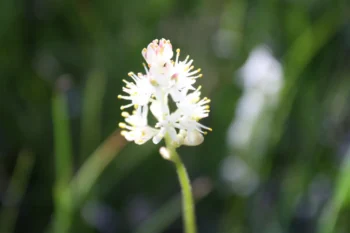
Western False Asphodel: A Unique Native Wetland Beauty
Meet the western false asphodel (Triantha occidentalis), a charming native perennial that’s been quietly gracing North America’s wetlands for centuries. This delicate beauty recently made headlines when scientists discovered it has a carnivorous secret – but don’t worry, it only snacks on tiny gnats, not gardeners!
What Makes Western False Asphodel Special?
Western false asphodel is a perennial forb, meaning it’s an herbaceous plant that lacks woody stems but returns year after year from its root system. Standing 6 to 24 inches tall, this understated charmer produces clusters of small, creamy-white flowers arranged in dense, elongated spikes during summer months. The flowers emerge above slender, grass-like leaves that form neat clumps.
What really sets this plant apart is its recent claim to fame: it’s one of the few carnivorous plants discovered in North America in recent decades. Tiny hairs on its flower stems trap small insects, providing the plant with extra nutrients in nutrient-poor wetland soils.
Where Does It Call Home?
This native gem has an impressive range across western North America. You’ll find western false asphodel growing naturally in Alaska, western Canada (Alberta and British Columbia), and throughout the western United States including California, Idaho, Montana, Oregon, Washington, and Wyoming.
- Species observed
- No observations
Why Grow Western False Asphodel?
If you’re looking to create a native wetland garden or need plants for consistently moist areas, western false asphodel offers several compelling reasons to include it in your landscape:
- Native authenticity: Support local ecosystems with a truly native species
- Unique interest: Few gardeners can claim they grow a carnivorous plant!
- Pollinator support: Attracts beneficial insects and small pollinators
- Low maintenance: Once established, requires minimal care
- Wetland specialist: Thrives where other plants struggle
Perfect Garden Settings
Western false asphodel isn’t your typical border plant – it has specific preferences that make it perfect for certain garden styles:
- Bog gardens and constructed wetlands
- Rain gardens and bioswales
- Native plant gardens emphasizing wetland species
- Naturalized pond edges
- Restoration projects in appropriate habitats
Growing Conditions and Care
Success with western false asphodel comes down to understanding its wetland nature. This plant has earned a Facultative Wetland status across its range, meaning it usually occurs in wetlands but can occasionally tolerate drier conditions.
Soil requirements: Consistently moist to wet, acidic soils with good organic content. Think bog-like conditions rather than standing water.
Light needs: Full sun to partial shade. In hotter climates, afternoon shade can be beneficial.
Hardiness: Thrives in USDA zones 3-8, making it suitable for most temperate climates.
Water needs: High – this is not a drought-tolerant plant. Soil should never completely dry out.
Planting and Establishment Tips
Getting western false asphodel established requires attention to its specific needs:
- Plant in spring after the last frost
- Ensure consistent moisture from day one – never let the soil dry out
- Add plenty of organic matter like peat moss or compost to improve soil structure
- Space plants 12-18 inches apart to allow for natural spreading
- Mulch around plants to retain moisture and suppress weeds
- Be patient – establishment can take a full growing season
Is This Plant Right for Your Garden?
Western false asphodel is definitely a specialized choice. It’s perfect if you have naturally wet areas in your garden or are creating a wetland habitat. However, it’s not suitable for typical garden borders or drought-tolerant landscapes.
Consider this plant if you:
- Have consistently moist to wet areas that need planting
- Want to support native wildlife and ecosystems
- Enjoy unusual plants with interesting stories
- Are creating a specialized native wetland garden
Skip this plant if you:
- Garden in naturally dry conditions
- Prefer low-water landscapes
- Don’t want to commit to consistent watering
- Need plants for typical perennial borders
A Fascinating Addition to Specialized Gardens
Western false asphodel may not be the showiest plant in the garden, but it brings authentic native character and fascinating biology to wetland settings. Its recent discovery as a carnivorous species adds an extra layer of intrigue that’s sure to spark conversations with fellow gardeners. If you have the right conditions and appreciate plants with unique adaptations, this native gem deserves a spot in your wetland garden.