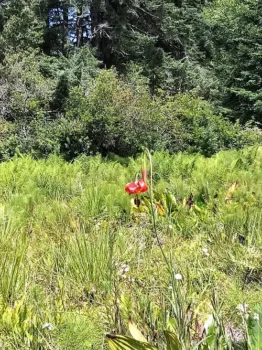
Western Lily: A Rare Jewel of the Pacific Coast
If you’ve ever dreamed of growing a truly spectacular native lily, the western lily (Lilium occidentale) might catch your eye with its stunning orange blooms and sweet fragrance. But before you start planning where to plant one, there’s something crucial you need to know about this remarkable Pacific Coast native.
A Plant on the Brink
The western lily isn’t just any garden flower – it’s one of North America’s rarest plants. With a conservation status of Critically Imperiled and listed as endangered in the western United States, this botanical treasure is hanging on by a thread in the wild. We’re talking about a plant with typically five or fewer known populations and fewer than 1,000 individuals remaining in nature.
Where Western Lilies Call Home
This stunning lily is native to a very specific slice of the Pacific Coast, naturally occurring only in California and Oregon. You won’t find it sprawling across the continent – its entire world consists of coastal bogs, wetland meadows, and streamside areas in this narrow geographic range.
- Species observed
- No observations
What Makes Western Lily Special
When western lilies do bloom (typically in summer), they put on quite a show. Picture this: elegant stems topped with 3-6 large, fragrant flowers in brilliant orange to red-orange hues, each petal adorned with distinctive dark spots. These aren’t your average garden lilies – they’re botanical celebrities that can reach several feet tall when conditions are just right.
As a perennial forb, western lilies return year after year from underground bulbs, though they take their time doing so. This isn’t a plant that rushes through life.
The Wildlife Connection
Those showy, fragrant blooms aren’t just for our enjoyment. Western lilies serve as important nectar sources for butterflies, bees, and even hummingbirds in their native habitat. Their large, trumpet-shaped flowers are perfectly designed to attract these pollinators.
Why You Shouldn’t Rush to Plant One
Here’s where we need to have a serious conversation. Given the western lily’s critically endangered status, this isn’t a plant for casual gardening. Here’s why:
- Wild populations are extremely fragile and shouldn’t be disturbed
- The plant requires very specific wetland conditions that are nearly impossible to replicate in typical gardens
- It naturally grows in facultative wetland environments – places that are usually wet but may occasionally dry out
- Cultivation attempts often fail due to the plant’s specialized habitat needs
If You’re Still Determined to Try
Should you absolutely want to attempt growing western lily, please follow these critical guidelines:
- Only obtain plants or seeds from reputable native plant nurseries that can guarantee responsibly sourced, legally propagated material
- Never collect from wild populations
- Ensure you can provide consistently moist to wet, acidic soil conditions
- Plan for partial shade and cool temperatures (USDA zones 7-9)
- Be prepared for a challenging growing experience
Better Alternatives for Your Garden
Instead of risking harm to wild western lily populations, consider these beautiful native alternatives that offer similar appeal but aren’t endangered:
- Columbia lily (Lilium columbianum) – another Pacific Coast native that’s more garden-adaptable
- Tiger lily species native to your specific region
- Other native bulbs suited to your local conditions
How You Can Really Help
The best thing you can do for western lilies is support their conservation in the wild. Consider donating to organizations working to protect coastal wetland habitats, volunteering for habitat restoration projects, or simply spreading awareness about this remarkable endangered species.
Sometimes the most loving thing we can do for a rare plant is to admire it from afar and work to protect its remaining wild homes. The western lily is a reminder that not every beautiful plant belongs in our gardens – some are meant to remain wild treasures for future generations to discover and protect.