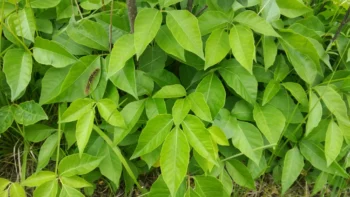
Western Poison Ivy: The Native Plant You Probably Don’t Want in Your Garden
Let’s talk about one of North America’s most notorious native plants: western poison ivy (Toxicodendron rydbergii). While we usually celebrate native species for their ecological benefits, this particular perennial presents a unique challenge that most gardeners will want to steer clear of – literally.
What Is Western Poison Ivy?
Western poison ivy is a native perennial forb that lacks significant woody tissue, distinguishing it from its shrubby eastern cousins. This herbaceous plant has been part of North America’s ecosystem for millennia, playing important ecological roles despite its reputation for causing severe allergic reactions in humans.
You might encounter this plant under several historical names in older botanical references, including various Rhus species classifications, but today it’s properly known as Toxicodendron rydbergii.
Where Does Western Poison Ivy Grow?
This adaptable native has one of the most impressive geographic distributions you’ll find in North American flora. Western poison ivy naturally occurs across an enormous range, from Canadian provinces including Alberta, British Columbia, Manitoba, New Brunswick, Nova Scotia, Ontario, Prince Edward Island, Quebec, Saskatchewan, and Yukon, down through most of the continental United States.
In the U.S., you can find it growing in Arizona, Colorado, Connecticut, Idaho, Illinois, Indiana, Iowa, Kansas, Maine, Maryland, Massachusetts, Michigan, Minnesota, Montana, Nebraska, Nevada, New Hampshire, New Mexico, New York, North Carolina, North Dakota, Ohio, Oklahoma, Oregon, Pennsylvania, Rhode Island, South Dakota, Texas, Utah, Vermont, Virginia, Washington, West Virginia, Wisconsin, and Wyoming.
- Species observed
- No observations
Should You Plant Western Poison Ivy?
Here’s where we need to have a frank conversation. While western poison ivy is undeniably native and ecologically valuable, it’s not a plant most gardeners should intentionally cultivate. The reason? It contains urushiol, the same compound found in poison oak and eastern poison ivy that causes severe allergic reactions in approximately 85% of people.
The Case Against Planting It
- Causes severe skin irritation, blistering, and rashes
- Allergic reactions can worsen with repeated exposure
- Smoke from burning plants is extremely dangerous if inhaled
- Difficult to handle safely during garden maintenance
- Can spread beyond intended areas
The Ecological Benefits (From a Distance)
Despite the risks, western poison ivy does provide significant ecological value:
- Produces small white berries that feed over 60 species of birds
- Offers small flowers that attract various pollinators
- Provides ground cover that helps prevent soil erosion
- Creates habitat for small wildlife
- Demonstrates remarkable adaptability to various conditions
Growing Conditions and Habitat
Western poison ivy’s widespread distribution tells us it’s incredibly adaptable. The plant’s wetland status varies by region, ranging from facultative (equally at home in wet or dry areas) to facultative upland (preferring drier sites but tolerating some moisture). This flexibility allows it to thrive in diverse conditions from coastal areas to mountain valleys.
The plant typically grows in USDA hardiness zones 3-9, making it suitable for most temperate North American climates.
Safe Identification and Management
If you encounter western poison ivy on your property, proper identification is crucial. Look for:
- Compound leaves with three leaflets
- Small, inconspicuous flowers
- White or cream-colored berries
- Low-growing, herbaceous habit (unlike woody poison ivy vines)
Safe Removal Tips
If you need to remove western poison ivy:
- Wear full protective clothing, including gloves, long sleeves, and eye protection
- Work when plants are dormant if possible
- Never burn poison ivy – the smoke is dangerous
- Wash all tools and clothing in hot water immediately after contact
- Consider hiring professional removal services
Native Alternatives to Consider
Instead of planting western poison ivy, consider these safer native groundcover alternatives:
- Wild ginger (Asarum canadense)
- Wintergreen (Gaultheria procumbens)
- Native sedges (Carex species)
- Creeping phlox (Phlox subulata)
- Wild strawberry (Fragaria virginiana)
The Bottom Line
While western poison ivy deserves respect as a native species with genuine ecological value, it’s one native plant that most gardeners should appreciate from afar. If it’s already growing on your property naturally, consider leaving it in place where it won’t interfere with human activities. However, intentionally planting it in home landscapes isn’t recommended due to the serious health risks it poses.
Remember: being native doesn’t automatically make a plant suitable for every garden situation. Sometimes the best way to support native ecosystems is to let certain species do their important work in wild spaces while we choose safer alternatives for our cultivated landscapes.