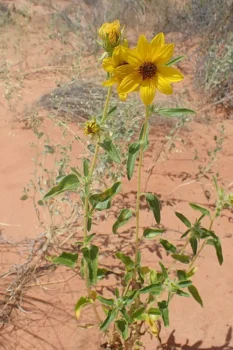
Western Sunflower: A Rare Desert Beauty Worth Protecting
Meet the western sunflower (Helianthus anomalus), a charming annual sunflower that calls the American Southwest home. While it may not be as well-known as its giant cousin, this petite sunflower packs a serious punch when it comes to supporting local wildlife and adding authentic desert charm to your garden.
What Makes Western Sunflower Special?
This delightful annual forb produces cheerful yellow blooms with dark centers, typically measuring 2-4 inches across. Don’t expect towering giants here – western sunflower keeps things more modest in size while delivering maximum impact for pollinators and wildlife. As a native plant of Arizona, Nevada, New Mexico, and Utah, it’s perfectly adapted to thrive in the challenging conditions of the desert Southwest.
- Species observed
- No observations
A Word of Caution: Rarity Matters
Before you rush to add this beauty to your garden, here’s something important to know: Western sunflower has a vulnerable conservation status, with only an estimated 21-100 occurrences or 3,000-10,000 individuals remaining in the wild. This means if you choose to grow it, you must source seeds or plants responsibly from reputable native plant nurseries or seed companies that ethically collect and propagate this species.
Never collect seeds or plants from wild populations – doing so could harm already fragile communities of this rare sunflower.
Why Choose Western Sunflower for Your Garden?
If you can source it responsibly, western sunflower offers several compelling reasons to include it in your landscape:
- Authentic native beauty: Nothing beats the real deal when creating a true desert garden
- Pollinator magnet: Bees, butterflies, and other native pollinators absolutely love these blooms
- Low maintenance: Once established, it requires minimal water and care
- Self-seeding: Annual plants that readily reseed themselves for next year’s show
- Conservation contribution: By growing it responsibly, you’re helping preserve genetic diversity
Perfect Garden Settings
Western sunflower shines brightest in:
- Native plant gardens showcasing Southwest flora
- Xeriscapes and water-wise landscapes
- Naturalized wildflower meadows
- Pollinator gardens in desert regions
- Educational or demonstration gardens
Growing Conditions and Care
This desert native is refreshingly straightforward to grow, provided you can mimic its natural habitat:
Sunlight: Full sun is non-negotiable – this plant evolved in the bright, intense light of the Southwest
Soil: Well-draining sandy or rocky soils work best. Heavy clay or constantly moist conditions are a no-go
Water: Drought tolerant once established, but appreciates occasional deep watering during extreme dry spells
Climate: Suitable for USDA hardiness zones 4-9, though it performs best in arid climates
Planting and Care Tips
Success with western sunflower comes down to timing and technique:
- When to plant: Direct seed in fall for spring germination, or early spring after last frost
- Spacing: Allow adequate room for air circulation between plants
- Watering: Water gently until established, then reduce to minimal supplemental irrigation
- Fertilizing: Avoid fertilizers – these plants prefer lean, nutrient-poor soils
- Maintenance: Deadhead spent blooms to encourage continued flowering, or leave some for wildlife and self-seeding
Supporting Wildlife
Western sunflower punches above its weight when it comes to supporting local ecosystems. The blooms attract native bees, butterflies, and other beneficial insects during the growing season. Later, birds appreciate the nutritious seeds, making this plant a year-round wildlife asset.
The Bottom Line
Western sunflower represents both an opportunity and a responsibility. If you live in its native range and can source it ethically, this rare beauty offers an authentic way to support local wildlife while creating a stunning desert garden. Just remember – with great rarity comes great responsibility. Always purchase from reputable sources and never collect from wild populations.
By growing western sunflower responsibly, you’re not just adding a beautiful native plant to your garden – you’re becoming a conservation partner in preserving this vulnerable species for future generations.