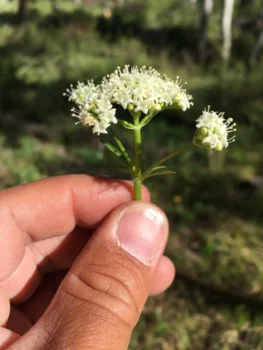
Western Valerian: A Native Perennial for Moisture-Loving Gardens
If you’re looking to add a touch of native charm to your garden with delicate white blooms, western valerian (Valeriana occidentalis) might just be the perfect addition. This understated perennial brings a gentle elegance to landscapes while supporting local ecosystems—though it does have some specific needs that might make you think twice depending on your garden setup.
What Is Western Valerian?
Western valerian is a native perennial forb that calls the western United States home. Unlike woody shrubs or trees, this herbaceous plant dies back to the ground each winter and emerges fresh each spring. It’s a true westerner, naturally growing across eleven states including Arizona, California, Colorado, Idaho, Montana, Nevada, Oregon, South Dakota, Utah, Washington, and Wyoming.
- Species observed
- No observations
As a native species, western valerian has evolved alongside local wildlife and climate conditions, making it a valuable addition to gardens focused on supporting regional ecosystems.
Garden Appeal and Characteristics
Don’t expect flashy, in-your-face blooms with western valerian—this plant is more about subtle beauty. Here’s what you can expect:
- Height reaches up to 3 feet tall in a semi-erect growth pattern
- Conspicuous white flowers appear in late spring
- Medium-textured green foliage provides a nice backdrop
- Moderate growth rate once established
- Spreads slowly through underground rhizomes
The plant has a moderate lifespan and maintains its green foliage throughout the growing season, though it’s not particularly showy in fall.
Where Western Valerian Shines (And Where It Doesn’t)
Western valerian is happiest in consistently moist conditions, earning it a facultative wetland status across its range. This means it can handle both wetland and non-wetland conditions, but it definitely prefers the wetter side of things.
This makes it perfect for:
- Rain gardens and bioswales
- Areas near natural water features
- Meadow gardens with irrigation
- Native plant landscapes with supplemental watering
However, if you’re hoping for a drought-tolerant, low-maintenance option, western valerian probably isn’t your best bet. It has no drought tolerance and requires high moisture use throughout the growing season.
Growing Conditions and Care
Western valerian can be a bit particular about its growing conditions, so here’s what you need to know:
Soil requirements:
- Prefers fine to medium-textured soils
- Needs good drainage despite high water needs
- pH range of 6.0 to 7.8 (slightly acidic to slightly alkaline)
- Medium fertility requirements
Light and water:
- Full sun locations only—it’s shade intolerant
- High moisture needs throughout the growing season
- Can handle temporary flooding (high anaerobic tolerance)
Climate considerations:
- Hardy to approximately USDA zones 5-9 (tolerates temperatures down to -28°F)
- Needs at least 100 frost-free days
- Thrives with 14-24 inches of annual precipitation
Planting and Propagation
Getting western valerian established requires some patience, as it has slow regrowth after disturbance and low seedling vigor. Here are your options:
From seed:
- Seeds are tiny—about 225,000 per pound!
- High seed abundance and moderate spread rate
- Seeds are produced in summer
- No cold stratification required
Vegetative propagation:
- Can be propagated by sprigs
- Spreads slowly through rhizomes once established
- Plant density can range from 2,700 to 4,800 plants per acre
Unfortunately, western valerian has no known commercial availability, so you’ll likely need to source seeds from native plant societies or specialty suppliers.
Wildlife and Pollinator Benefits
While specific wildlife benefits aren’t well-documented, western valerian’s white spring flowers likely provide nectar for various pollinators during their blooming period. As a native plant, it’s naturally part of the local food web and provides habitat value for insects and other small creatures.
The Bottom Line
Western valerian is a lovely choice for gardeners who want to support native ecosystems and don’t mind providing consistent moisture. It’s perfect for naturalized meadow areas, rain gardens, and informal native landscapes. However, if you’re looking for a low-water, low-maintenance plant, you might want to consider other native options that are better suited to dry conditions.
The plant’s slow establishment and specific moisture needs mean it requires some commitment, but for the right garden setting, western valerian can provide years of delicate beauty while supporting local wildlife populations.