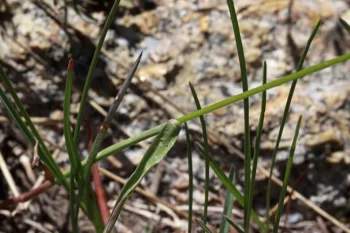
Wheeler Bluegrass: A Quiet Champion for Pacific Northwest Native Gardens
If you’re looking for a native grass that won’t steal the spotlight but will quietly anchor your Pacific Northwest garden, Wheeler bluegrass (Poa nervosa) might just be your perfect match. This unassuming perennial grass brings authentic regional character to naturalized landscapes without the drama of showier ornamental grasses.
What Makes Wheeler Bluegrass Special
Wheeler bluegrass is a true Pacific Northwest native, naturally occurring in Alberta, British Columbia, Oregon, and Washington. As a member of the grass family, it forms neat bunches rather than spreading aggressively, making it a well-behaved addition to native plant communities.
- Species observed
- No observations
This modest grass reaches about 1.8 feet tall with a semi-erect growth habit and medium-textured green foliage. While its yellow flowers won’t win any beauty contests (they’re quite inconspicuous), Wheeler bluegrass earns its keep through reliability and authentic regional appeal.
Why Consider Wheeler Bluegrass for Your Garden
Wheeler bluegrass shines in specific garden situations:
- Native plant gardens seeking authentic regional species
- Meadow restorations and naturalized landscapes
- Low-maintenance areas where you want native grass texture
- Sites where you need a non-spreading bunch grass
- Fire-prone areas (it has high fire tolerance)
However, this grass isn’t for everyone. It has a slow growth rate and can take time to establish, so patience is required. It’s also shade intolerant, so skip it for woodland gardens.
Growing Conditions and Care
Wheeler bluegrass is surprisingly specific about its preferences:
- Soil: Prefers coarse to medium-textured, well-drained soils (avoid heavy clay)
- pH: Slightly acidic to neutral (6.2-7.5)
- Moisture: Moderate water needs; facultative upland status means it usually grows in non-wetland areas
- Sun exposure: Full sun only – this grass is intolerant of shade
- Hardiness: Cold hardy to at least -18°F
The grass prefers areas receiving 12-30 inches of annual precipitation, making it well-suited to the Pacific Northwest’s climate patterns.
Planting and Establishment
Wheeler bluegrass is typically grown from seed, as commercial nursery availability is limited. Here’s what you need to know:
- Seeds are produced in medium abundance during summer
- Approximately 951,667 seeds per pound
- No cold stratification required
- Expect slow establishment with medium seedling vigor
- Active growth occurs in spring and summer
Plant seeds in fall or early spring when soil moisture is adequate. Be patient – this grass takes its time but rewards persistence with long-term reliability.
A Note About Conservation
Wheeler bluegrass has an uncertain conservation status (S3?), which means we don’t have complete information about its population stability. If you choose to plant it, source seeds or plants from reputable native plant suppliers who collect responsibly and don’t impact wild populations.
Wildlife and Ecosystem Benefits
While Wheeler bluegrass may not be a pollinator magnet (it’s wind-pollinated like most grasses), it contributes to native ecosystem health by providing authentic habitat structure. Native grasses like this support soil stability and provide texture in naturalized plantings.
The Bottom Line
Wheeler bluegrass isn’t flashy, fast-growing, or easy to find at your local garden center. But for gardeners committed to authentic Pacific Northwest native plantings, it offers genuine regional character and reliable performance once established. Consider it if you’re creating meadow areas, restoration projects, or naturalized landscapes where a well-behaved native bunch grass fits your vision.
Just remember: this grass rewards patience over instant gratification, and it definitely needs its sunny spot to thrive.