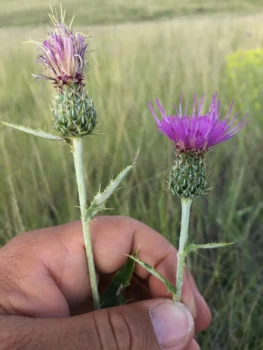
Wheeler’s Thistle: A Native Southwestern Beauty for Pollinator Gardens
If you’ve been searching for a native plant that combines striking purple blooms with serious pollinator power, Wheeler’s thistle (Cirsium wheeleri) might just be your new garden hero. This perennial forb brings a wild, natural beauty to southwestern landscapes while supporting local ecosystems in ways that non-native plants simply can’t match.
What is Wheeler’s Thistle?
Wheeler’s thistle is a native perennial forb, meaning it’s a non-woody plant that comes back year after year. Unlike shrubs or trees, this hardy survivor lacks significant woody tissue and keeps its growing points at or below ground level—a clever adaptation that helps it weather tough conditions. You might also see it listed under its botanical synonyms like Cirsium blumeri or Cnicus wheeleri in older gardening references.
Where Wheeler’s Thistle Calls Home
This southwestern native has made itself comfortable across five states: Arizona, Colorado, Nevada, New Mexico, and Utah. It’s perfectly adapted to the unique growing conditions of this region, from high desert plains to mountain foothills.
- Species observed
- No observations
Why Consider Wheeler’s Thistle for Your Garden?
Here’s where Wheeler’s thistle really shines—it’s a pollinator magnet! Those gorgeous purple-pink flowers, typically measuring 1-2 inches across, are like neon signs for butterflies, native bees, and other beneficial insects. The blooms can appear from spring through fall, providing a long season of nectar when many other plants have called it quits.
Wheeler’s thistle works beautifully in:
- Native plant gardens
- Xeriscaped landscapes
- Wildflower meadows
- Naturalized areas
- Pollinator habitat projects
Important Conservation Note
Before you rush to add Wheeler’s thistle to your shopping list, there’s something important to know: this plant has a global conservation status of S3S4, indicating it faces some level of rarity or concern in parts of its range. This doesn’t mean you can’t grow it—in fact, cultivating native plants in gardens can help support threatened species! However, it does mean you should source your plants or seeds responsibly from reputable native plant nurseries rather than collecting from wild populations.
Growing Wheeler’s Thistle Successfully
Good news for busy gardeners: Wheeler’s thistle is refreshingly low-maintenance once established. It’s adapted to USDA hardiness zones 4-9, making it suitable for a wide range of climates within its native region.
Ideal Growing Conditions
Wheeler’s thistle appreciates:
- Well-draining soil (it won’t tolerate soggy conditions)
- Full sun to partial shade
- Minimal water once established—this is a drought-tolerant champion
- Room to naturalize, as it may self-seed in favorable conditions
Planting and Care Tips
The easiest way to establish Wheeler’s thistle is through direct seeding in fall, which allows natural stratification over winter. If you’re starting with nursery plants, spring planting works well too.
Once established, Wheeler’s thistle is remarkably self-sufficient. Water regularly during the first growing season to help roots establish, then step back and let nature take over. Avoid over-fertilizing—like many natives, it actually prefers lean soils and too much nitrogen can make it leggy and prone to problems.
Is Wheeler’s Thistle Right for Your Garden?
Wheeler’s thistle is perfect for gardeners who want to support native ecosystems while enjoying beautiful, low-maintenance blooms. It’s especially valuable if you’re creating habitat for pollinators or working on a water-wise landscape design.
Keep in mind that like all thistles, it does have spiny stems and leaves—not the best choice right next to heavily trafficked pathways. But in a naturalized area or mixed with other native plants, it adds authentic southwestern character and ecological value that non-native alternatives simply can’t provide.
By choosing Wheeler’s thistle, you’re not just adding another pretty flower to your garden—you’re helping preserve a piece of southwestern natural heritage while creating habitat that native wildlife has depended on for centuries.