White Adder’s-Mouth Orchid: A Tiny Native Treasure Worth Protecting
If you’re drawn to the delicate beauty of native orchids, the white adder’s-mouth orchid (Malaxis brachypoda) might just capture your heart. This diminutive perennial orchid is one of North America’s more subtle wildflowers, offering quiet elegance rather than showy blooms. But before you start planning where to plant one, there are some important things every gardener should know about this special little species.
What Makes White Adder’s-Mouth Orchid Special?
White adder’s-mouth orchid is a true native gem, naturally occurring across an impressively wide range from Alaska all the way down through Canada and into the northern United States. You’ll find it growing wild in states and provinces including Alberta, British Columbia, Alaska, Maine, Massachusetts, Michigan, Minnesota, and many others across the northern tier of North America.
- Species observed
- No observations
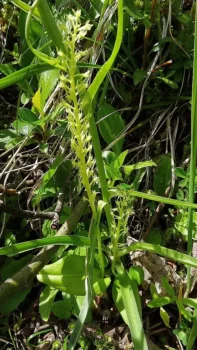
This little orchid is what botanists call a forb – essentially a non-woody perennial plant that dies back to ground level each winter and returns from underground parts in spring. Don’t expect anything flashy though. The white adder’s-mouth orchid is all about understated charm, typically growing just a few inches tall with a single basal leaf and a delicate spike of tiny white to greenish-white flowers.
The Rarity Reality Check
Here’s where things get serious: while this orchid has a wide natural range, it’s actually quite rare in many locations. In New Jersey, for example, it’s listed as Endangered with special protections in the Pinelands and Highlands regions. This rarity status is a crucial consideration for any gardener interested in this species.
If you’re determined to grow white adder’s-mouth orchid, you absolutely must source your plants responsibly. Never collect from the wild – this can harm already vulnerable populations. Instead, work only with reputable native plant nurseries that propagate their orchids ethically.
Growing Conditions: Not for Beginners
Let’s be honest – white adder’s-mouth orchid isn’t exactly what you’d call beginner-friendly. This orchid has very specific needs that can be challenging to meet in typical garden settings:
- Cool, consistently moist conditions
- Acidic soil with excellent drainage
- Partial to full shade
- Hardy in USDA zones 2-6
- Bog or wet woodland conditions
The biggest challenge? Like most orchids, white adder’s-mouth depends on specific mycorrhizal fungi in the soil to survive. These beneficial fungi form partnerships with the orchid’s roots, helping it absorb nutrients. Without the right fungal partners, the orchid simply won’t thrive – or even survive.
Is This Orchid Right for Your Garden?
White adder’s-mouth orchid is best suited for specialized gardens rather than typical backyard landscapes. Consider it if you have:
- A bog garden or wet woodland area
- Experience growing native orchids
- Patience for slow-growing, subtle plants
- A commitment to conservation-minded gardening
This orchid works beautifully in naturalistic woodland gardens alongside other native bog plants, or as part of a specialized native orchid collection. Just don’t expect it to be a showstopper – its appeal lies in its delicate, almost secretive presence.
Wildlife and Pollinator Benefits
While white adder’s-mouth orchid does attract some small pollinators like tiny flies and gnats, its wildlife value is relatively modest compared to showier native plants. The flowers are quite small, so they’re not major nectar sources for larger pollinators like bees and butterflies.
The Bottom Line
White adder’s-mouth orchid is undoubtedly a fascinating native plant that deserves our respect and protection. However, it’s not a plant for every gardener or every garden. If you’re drawn to native orchids and have the right growing conditions, it can be a rewarding addition – but only if you source it responsibly and understand the commitment involved.
For most gardeners interested in supporting native plants and pollinators, there are easier and more impactful choices available. Consider other native wildflowers that are less rare and more garden-friendly, while still providing excellent benefits for local ecosystems.
Remember, sometimes the best way to appreciate a rare native plant is to support its conservation in the wild rather than trying to grow it at home. If you do decide to grow white adder’s-mouth orchid, you’re taking on the role of a conservation gardener – and that’s a responsibility worth taking seriously.