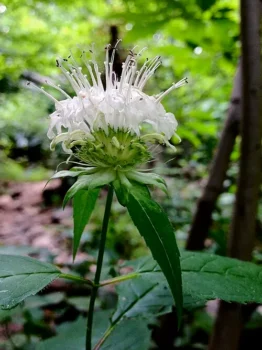
White Bergamot: A Hidden Gem for Native Plant Gardens
If you’re looking to add a touch of elegance and ecological value to your garden, white bergamot (Monarda clinopodia) might just be the perfect choice. This charming native perennial brings delicate beauty and important wildlife benefits to naturalized landscapes, though it requires a bit more consideration than your typical garden center find.
What is White Bergamot?
White bergamot is a native North American perennial herb that belongs to the mint family. Unlike its more flamboyant cousin bee balm (Monarda didyma), white bergamot offers a more subtle charm with its pale white to soft pink tubular flowers. This herbaceous perennial grows as a forb, meaning it lacks woody stems but returns reliably each year from its underground parts.
You might occasionally see this plant listed under its synonyms Monarda allophylla or as a variety of wild bergamot (Monarda fistulosa var. clinopodia), but regardless of the name on the tag, you’re getting the same lovely native species.
Where Does White Bergamot Grow Naturally?
White bergamot has quite an impressive native range across the eastern United States. You’ll find it naturally growing in 23 states, stretching from Massachusetts and Vermont in the north, down through the Carolinas and Georgia in the south, and west into states like Illinois, Missouri, and Michigan. This wide distribution speaks to its adaptability and ecological importance across diverse regions.
- Species observed
- No observations
A Word About Conservation
Here’s where things get important: white bergamot is considered rare in some parts of its range. In Alabama, it holds an S2 rarity status, meaning it’s imperiled in the state. In New Jersey, it’s actually listed as endangered and receives special protection in the Pinelands and Highlands regions. This doesn’t mean you shouldn’t grow it—quite the opposite! Growing native plants in gardens can help support local populations, but it does mean you need to be thoughtful about your sources.
Always purchase white bergamot from reputable native plant nurseries that grow their stock from seed or propagate from ethically sourced material. Never collect plants from wild populations, especially in states where it’s rare.
Why Choose White Bergamot for Your Garden?
Aesthetic Appeal
White bergamot brings a refined, naturalistic beauty to the garden. Its clusters of small, tubular white to pale pink flowers bloom from mid to late summer, creating an airy, delicate appearance that works beautifully in naturalized settings. The aromatic foliage releases a pleasant mint-like fragrance when brushed or crushed, adding a sensory dimension to your garden experience.
Pollinator Powerhouse
Despite its subtle appearance, white bergamot is a pollinator magnet. Its tubular flowers are perfectly designed for long-tongued native bees, and it also attracts butterflies and hummingbirds. By planting white bergamot, you’re supporting local pollinator populations with a plant that co-evolved with them over thousands of years.
Low-Maintenance Nature
Once established, white bergamot is refreshingly low-maintenance. It’s adapted to a range of conditions and doesn’t need the constant coddling that many garden perennials demand.
Growing White Bergamot Successfully
Ideal Growing Conditions
White bergamot is quite adaptable, which explains its wide natural range. It thrives in:
- USDA hardiness zones 4-8
- Partial shade to full sun (though it appreciates some afternoon shade in hotter climates)
- Moist to moderately dry soils
- Various soil types, from clay to sandy loam
Its wetland status is facultative upland, meaning it usually prefers non-wetland conditions but can tolerate occasional wet periods. This makes it perfect for those tricky spots in your garden that are sometimes dry, sometimes moist.
Where to Use It in Your Landscape
White bergamot shines in:
- Native plant gardens and naturalized areas
- Woodland borders and edges
- Pollinator gardens and meadow-style plantings
- Mid-border positions in perennial beds
- Areas where you want a more subtle, natural look
Planting and Care Tips
Getting white bergamot established is straightforward:
- Plant in spring after the last frost or in early fall
- Space plants 12-18 inches apart to allow for natural spreading
- Water regularly the first year while roots establish
- Deadhead spent flowers to encourage continued blooming
- Divide clumps every 3-4 years to maintain vigor and prevent overcrowding
- Cut back to ground level in late fall or early spring
Is White Bergamot Right for Your Garden?
White bergamot is an excellent choice if you’re interested in native plants, supporting local wildlife, and creating naturalistic garden spaces. It’s particularly valuable for gardeners in its native range who want to grow plants with local ecological significance.
However, it might not be the best fit if you prefer formal gardens with bold, showy flowers, or if you’re looking for something that blooms all season long. Its beauty is more subtle and fleeting than some garden favorites.
Given its rarity status in some areas, choosing to grow white bergamot is also a small act of conservation. You’re helping to preserve genetic diversity and potentially providing seed sources for future restoration projects—all while enjoying a beautiful, low-maintenance native plant in your own backyard.
Just remember: source responsibly, plant thoughtfully, and enjoy watching this gentle native bring its quiet magic to your garden while supporting the local ecosystem that depends on it.