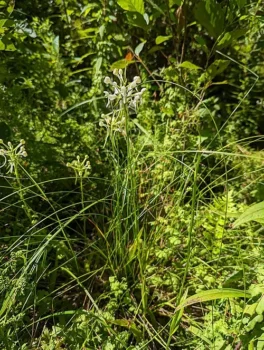
White Fringeless Orchid: A Rare Wetland Treasure Worth Protecting
Meet the white fringeless orchid (Platanthera integrilabia), sometimes charmingly called monkeyface – a delicate native beauty that’s become one of our most endangered wildflowers. This isn’t your typical garden center find, and honestly, that’s probably for the best. Let me explain why this special orchid deserves our admiration from afar.
What Makes This Orchid Special
The white fringeless orchid is a perennial forb that produces elegant spikes of small, pristine white flowers. Unlike many of its flashier orchid cousins, this species keeps things simple with clean, unfrilled petals arranged in a neat column that can reach 6-20 inches tall. The monkeyface nickname comes from the distinctive shape of the individual flowers – if you squint just right, you might see the resemblance!
Where to Find This Native Beauty
This orchid calls the southeastern United States home, naturally occurring in Alabama, Georgia, Kentucky, Louisiana, Mississippi, North Carolina, South Carolina, Tennessee, Texas, and Virginia. It’s a true wetland specialist, thriving in the boggy, seepage areas that dot our southeastern landscape.
- Species observed
- No observations
The Reality Check: Why You Probably Shouldn’t Grow It
Here’s where we need to have an honest conversation. The white fringeless orchid is federally listed as Threatened, with a global conservation status that puts it in serious jeopardy. This isn’t just a slightly uncommon plant – it’s genuinely rare and declining.
But rarity isn’t the only challenge. This orchid is what we call an obligate wetland plant, meaning it almost always occurs in wetlands. It has very specific needs:
- Constantly saturated, acidic soils
- Specific mycorrhizal relationships (beneficial fungi partnerships)
- High humidity and partial shade
- Undisturbed wetland conditions
Even experienced native plant gardeners struggle with orchids, and this species is particularly finicky about its growing conditions.
A Better Way to Appreciate This Orchid
Instead of trying to grow white fringeless orchid, consider these alternatives:
- Support wetland conservation organizations
- Visit botanical gardens or nature preserves where it might be displayed
- Create habitat for other native wetland plants that are more garden-friendly
- Choose easier native alternatives like wild bergamot or cardinal flower for pollinator gardens
The Pollinator Connection
In its natural habitat, the white fringeless orchid serves as an important nectar source for specialized pollinators, including certain moths and butterflies. These relationships have evolved over thousands of years and are incredibly difficult to replicate in home gardens.
Conservation in Your Own Backyard
While you can’t easily grow this particular orchid, you can still make a difference for native plants. Focus on creating habitat with other native species that support the same ecosystems. If you have wet areas in your landscape, consider native sedges, native iris species, or swamp milkweed – all of which are more adaptable to cultivation.
The Bottom Line
The white fringeless orchid is absolutely worth celebrating, but it’s best admired in its natural habitat or through conservation efforts rather than home cultivation. Sometimes the most loving thing we can do for a rare plant is to let it be wild.
If you’re passionate about supporting this species, consider donating to wetland conservation groups or volunteering with local botanical surveys. That’s how we can ensure future generations get to experience the quiet magic of discovering a monkeyface orchid blooming in a hidden bog – exactly where it belongs.