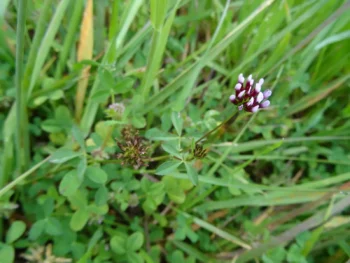
Whitetip Clover: A Rare Native Gem Worth Protecting in Your Garden
If you’re looking to add a touch of conservation magic to your native garden, whitetip clover (Trifolium variegatum) might just be the perfect choice—with one very important caveat. This charming little annual is more than just another clover; it’s a critically rare native plant that deserves our attention and protection.
What Makes Whitetip Clover Special?
Whitetip clover gets its common name from its distinctive white flowers that feature dark-tipped petals, creating a striking contrast that makes it stand out from other clover species. As an annual forb, this plant completes its entire life cycle in one growing season, producing delicate trifoliate leaves and compact, rounded flower heads that are both charming and ecologically valuable.
You might also encounter this plant listed under several botanical synonyms, including Trifolium appendiculatum, Trifolium geminiflorum, and Trifolium melananthum, among others.
Where Does Whitetip Clover Call Home?
This native North American species has quite an impressive range, naturally occurring across western regions from British Columbia down to California and eastward to Wyoming. You’ll find it growing wild in Alaska, Arizona, California, Idaho, Montana, Nevada, Oregon, Utah, Washington, and Wyoming.
- Species observed
- No observations
A Word of Caution: Rarity Status
Important: Before you rush to add whitetip clover to your shopping list, there’s something crucial you need to know. This species has a Global Conservation Status of S1, meaning it’s critically imperiled with typically five or fewer occurrences remaining in the wild. This makes whitetip clover an extremely rare plant that requires special consideration.
If you’re interested in growing this species, only obtain seeds or plants from reputable native plant nurseries that can guarantee responsibly sourced, ethically collected material. Never collect seeds or plants from wild populations—doing so could push this rare species closer to extinction.
Growing Whitetip Clover Successfully
Ideal Growing Conditions
Whitetip clover is quite adaptable when it comes to moisture levels. With a facultative wetland status across most of its range, it can thrive in both wetland and upland conditions, though it generally prefers:
- Moist to seasonally wet soils
- Full sun to partial shade
- Well-draining soil that doesn’t stay waterlogged
- USDA hardiness zones 3-9
Planting and Care Tips
As an annual, whitetip clover is relatively low-maintenance once you understand its needs:
- Timing: Direct seed in fall or early spring for best germination
- Soil prep: Light soil preparation is usually sufficient
- Watering: Provide consistent moisture during germination and establishment
- Maintenance: Minimal care required once established—let it self-seed for future seasons
Garden Design and Landscape Role
Whitetip clover works beautifully in:
- Native plant gardens and restoration projects
- Wildflower meadows and naturalized areas
- Rain gardens and seasonal wet areas
- Pollinator gardens (it attracts bees, butterflies, and other beneficial insects)
Its compact growth habit makes it an excellent ground cover option, and its annual nature means it won’t become overly aggressive in your garden beds.
Environmental Benefits
Like other members of the legume family, whitetip clover helps improve soil health by fixing nitrogen. Its flowers provide nectar and pollen for various pollinators, making it a valuable addition to any wildlife-friendly garden. As a native species, it also supports local ecosystems and provides habitat for native insects.
The Bottom Line
Whitetip clover is a fascinating native plant that deserves a place in conservation-minded gardens. However, its critically imperiled status means that growing it comes with responsibility. If you can source it ethically and provide appropriate growing conditions, you’ll be rewarded with a unique, ecologically valuable plant that supports local wildlife while helping preserve a rare piece of North America’s natural heritage.
Remember: every garden can be a small sanctuary for native plants. By choosing species like whitetip clover (when responsibly sourced), you’re not just creating beautiful landscapes—you’re participating in conservation efforts that matter.