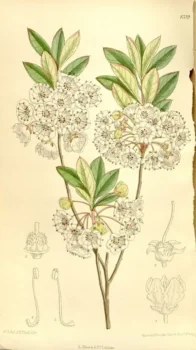
Whitewicky: A Rare Gem for Your Native Garden
If you’re looking to add a truly special native shrub to your garden, let me introduce you to whitewicky (Kalmia cuneata). This little-known member of the heath family is a true treasure of the southeastern United States, though you’ll need to be thoughtful about how you acquire it.
What Makes Whitewicky Special?
Whitewicky is a charming perennial shrub that typically grows as a multi-stemmed woody plant, usually staying under 13-16 feet tall. As an evergreen member of the Kalmia genus, it brings year-round structure to your landscape while offering delicate clusters of small, bell-shaped flowers that range from white to pale pink. These blooms appear in terminal clusters, creating a lovely display that attracts native bees and other small pollinators.
Where Does Whitewicky Come From?
This native beauty has a very limited natural range, growing only in North Carolina and South Carolina. Within these states, you’ll find it naturally occurring in the coastal plain regions, where it has adapted to the unique growing conditions of the Southeast.
- Species observed
- No observations
Important Conservation Note
Here’s something crucial to know before you fall in love with this plant: whitewicky has a Global Conservation Status of S3, meaning it’s considered vulnerable. With typically only 21 to 100 occurrences and between 3,000 to 10,000 individuals in the wild, this species is quite rare. If you choose to grow whitewicky, please only purchase from reputable native plant nurseries that propagate their plants responsibly rather than collecting from wild populations.
Perfect Spots for Whitewicky in Your Garden
Whitewicky shines in several garden settings:
- Native plant gardens focused on southeastern species
- Rain gardens and wetland areas
- Woodland gardens with dappled light
- Conservation landscapes
- Naturalized understory plantings
This shrub works beautifully as an understory plant, adding structure and evergreen interest beneath taller trees while supporting local wildlife.
Growing Conditions and Care
Whitewicky is quite specific about its growing preferences, which mirrors its natural habitat requirements:
Hardiness: Suitable for USDA zones 7-9, making it perfect for much of the Southeast
Light: Adaptable from partial shade to full sun, though it appreciates some protection during the hottest part of the day
Soil: Prefers acidic, moist to wet soils. This plant has a wetland status of Facultative Wetland, meaning it usually grows in wetlands but can tolerate some non-wetland conditions
Water: Consistent moisture is key – this plant can even tolerate periodic flooding, making it excellent for rain gardens
Planting and Care Tips
Getting whitewicky established successfully requires attention to its moisture needs:
- Plant in spring or fall when temperatures are moderate
- Ensure soil stays consistently moist, especially during the first growing season
- Apply organic mulch around the base to retain moisture and suppress weeds
- Minimal pruning is needed – just remove any dead or damaged branches
- Be patient with establishment, as this species may take time to settle in
Supporting Wildlife and Pollinators
While whitewicky may be rare, it plays an important role in supporting local ecosystems. Its flowers provide nectar for native bees and other small pollinators, while the evergreen foliage offers year-round shelter for small wildlife. By growing this plant, you’re not just adding beauty to your garden – you’re helping preserve a piece of southeastern natural heritage.
The Bottom Line
Whitewicky is a plant for the thoughtful gardener who values conservation and native plant preservation. While its rarity means you’ll need to source it carefully, it rewards patient gardeners with unique beauty, wildlife value, and the satisfaction of growing something truly special. If you have the right growing conditions – acidic, moist soil and suitable climate – and can find responsibly propagated plants, whitewicky makes a meaningful addition to any native plant collection.
Remember, every native plant we grow in our gardens is a small act of conservation, and with rare species like whitewicky, that act becomes even more significant.