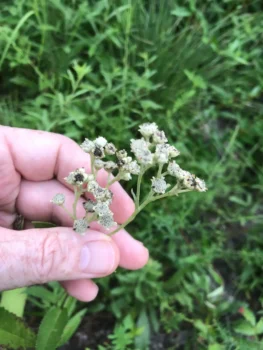
Wild Quinine: A Rare Native Gem Worth Knowing About
If you’re passionate about native plants and love discovering botanical treasures, you might want to learn about wild quinine (Parthenium integrifolium var. mabryanum). This perennial forb represents a special variety of a beloved native species, though it comes with some important considerations for the conscientious gardener.
What Makes This Plant Special
Wild quinine belongs to the sunflower family and is classified as a forb – essentially a non-woody flowering plant that dies back to the ground each winter and returns the following spring. Unlike shrubs or trees, this perennial lacks significant woody tissue above ground, storing its energy in underground structures that help it survive through the seasons.
You might also see this plant listed under its synonym, Parthenium radfordii Mears, in some botanical references, but Parthenium integrifolium var. mabryanum is the currently accepted scientific name.
Where You’ll Find It Growing Wild
This variety of wild quinine is native to a limited region of the southeastern United States, specifically found in North Carolina, South Carolina, and Virginia. Its restricted range makes it quite special among native plant enthusiasts who appreciate regional specialties.
- Species observed
- No observations
A Word About Rarity
Here’s where things get important for responsible gardeners: this plant has conservation status codes that suggest it may be uncommon or rare in its native range. The Global Conservation Status ratings indicate this variety deserves special attention from a conservation perspective.
If you’re interested in growing wild quinine in your garden and live within its native range, this could be a wonderful way to support local biodiversity. However, it’s crucial to source plants responsibly from reputable native plant nurseries that propagate their stock rather than collecting from wild populations.
Should You Grow Wild Quinine?
The decision to grow this particular variety comes down to a few key factors:
- You live within or near its native range (North Carolina, South Carolina, or Virginia)
- You can source plants from responsible nurseries that don’t wild-collect
- You’re committed to supporting rare native plant conservation
- You appreciate having unique, locally-adapted plants in your garden
If you don’t live in its native range, consider exploring other Parthenium integrifolium varieties or the main species that might be native to your area instead.
Growing Considerations
Unfortunately, specific growing information for this exact variety is limited in readily available sources. If you decide to pursue growing wild quinine, your best bet is to:
- Contact native plant societies in North Carolina, South Carolina, or Virginia
- Reach out to botanical gardens or universities in the region
- Connect with specialty native plant nurseries familiar with local varieties
These experts can provide specific guidance on growing conditions, care requirements, and proper sourcing for this particular variety.
The Bottom Line
Wild quinine represents the kind of plant that makes native gardening so rewarding – it’s a local treasure with ecological importance and conservation value. While we might not have all the growing details at our fingertips, sometimes the most meaningful plants in our gardens are worth the extra effort to research and source responsibly.
If this variety calls to you, take the time to connect with regional experts and find properly sourced plants. You’ll not only gain a unique addition to your garden but also become part of the conservation story for a special native plant variety.