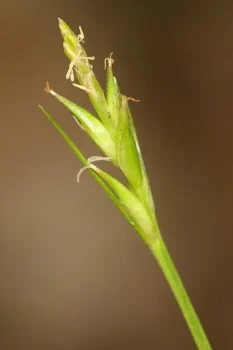
Willdenow’s Sedge: A Quietly Beautiful Native for Shady Spots
If you’re looking for a low-maintenance native plant that thrives in those tricky shady corners of your garden, let me introduce you to Willdenow’s sedge (Carex willdenowii). This unassuming little perennial might not win any flashy flower contests, but it’s exactly the kind of steady, reliable plant that forms the backbone of a successful native garden.
What Is Willdenow’s Sedge?
Willdenow’s sedge is a native North American perennial that belongs to the sedge family. Don’t let the name fool you – while it’s grass-like in appearance, sedges are actually quite different from true grasses. This particular species forms small, neat clumps of narrow, arching green leaves that add a soft, textural element to woodland gardens.
As a native species, Carex willdenowii has been quietly doing its thing across eastern North America for thousands of years, from southeastern Canada down through much of the eastern United States.
Where Does It Grow Naturally?
This adaptable sedge calls a impressive range of states home, including Alabama, Arkansas, Connecticut, Delaware, Illinois, Indiana, Kentucky, Maryland, Massachusetts, Missouri, New Jersey, New York, North Carolina, Ohio, Pennsylvania, South Carolina, Tennessee, Texas, Vermont, Virginia, and West Virginia, plus Ontario in Canada.
- Species observed
- No observations
A Word About Rarity
Here’s something important to know: Willdenow’s sedge is considered rare in some areas. In Arkansas, it has a rarity status of S1 (critically imperiled), and in New Jersey, it’s listed as S2 (imperiled) and appears on the Highlands Listed species. If you’re planning to add this plant to your garden, please make sure you source it from reputable native plant nurseries that propagate their own stock rather than collecting from wild populations.
Why Consider Willdenow’s Sedge for Your Garden?
While this sedge might not be the showiest plant in your garden, it brings several valuable qualities to the table:
- Native habitat value: As a native species, it provides important habitat structure for small wildlife and insects
- Low maintenance: Once established, it requires minimal care
- Shade tolerance: Perfect for those challenging shady spots where many plants struggle
- Soil flexibility: Adapts to various soil conditions
- Year-round presence: Provides structure and texture throughout the growing season
Where Does It Fit in Your Landscape?
Willdenow’s sedge shines in woodland gardens, native plant gardens, and naturalized areas. It’s particularly valuable as a groundcover in shaded areas where you want something more interesting than plain grass but less demanding than fussy perennials. Think of it as nature’s own carpet – subtle, durable, and perfectly suited to life under trees.
This sedge works beautifully planted in drifts among native wildflowers, paired with ferns, or used to create soft transitions between different garden areas. Its fine texture provides nice contrast against broader-leaved plants like wild ginger or mayapple.
Growing Conditions and Care
The good news is that Willdenow’s sedge is pretty easygoing once you understand its preferences. Here’s what it needs to thrive:
- Light: Shade to partial shade (morning sun is fine, but avoid hot afternoon sun)
- Soil: Well-draining to moderately moist soil; adapts to various soil types
- Water: Moderate moisture; drought tolerant once established
- Hardiness: USDA zones 4-8
Planting and Care Tips
Getting started with Willdenow’s sedge is refreshingly straightforward:
- Plant in spring or fall when temperatures are moderate
- Space plants about 12-18 inches apart for groundcover effect
- Water regularly the first season to help establish roots
- Once established, it’s quite drought tolerant
- Divide clumps every 3-4 years if desired, though it’s not necessary
- No fertilization needed – it prefers lean soils
- Cut back old foliage in late winter before new growth emerges
A Note About Wetland Status
Interestingly, Willdenow’s sedge has different relationships with water depending on where it’s growing. In most regions, it’s classified as obligate upland or facultative upland, meaning it strongly prefers well-drained sites and rarely occurs in wetlands. This makes it perfect for typical garden conditions rather than rain gardens or bog areas.
The Bottom Line
Willdenow’s sedge might not be the plant that makes your neighbors stop and stare, but it’s exactly the kind of reliable native that creates the foundation for a healthy, sustainable garden ecosystem. If you have shady areas that need a low-maintenance, native groundcover, this quiet beauty deserves serious consideration.
Just remember to source it responsibly from reputable native plant nurseries, especially given its rarity in some regions. Your local native plant society or extension office can often recommend good sources in your area.
Sometimes the best garden plants are the ones that do their job quietly and well – and Willdenow’s sedge fits that description perfectly.