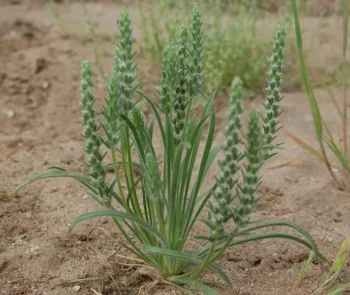
Woolly Plantain: A Humble Native Annual Worth Knowing
Meet woolly plantain (Plantago patagonica), one of those understated native plants that might not win any beauty contests but definitely deserves a spot in the conversation about sustainable gardening. This modest little annual forb brings quiet charm and ecological value to gardens across much of North America, proving that sometimes the most unassuming plants pack the biggest punch for local ecosystems.
What Is Woolly Plantain?
Woolly plantain is a native annual forb that grows as a single crown, reaching about half a foot tall at maturity. True to its name, this plant sports gray-green foliage with a distinctly fuzzy, woolly texture that gives it a soft, almost silvery appearance. During spring and summer, it produces small, inconspicuous yellow flowers that may not catch your eye but certainly catch the attention of beneficial insects and small pollinators.
As an annual, woolly plantain completes its entire life cycle in one growing season, from seed to flower to seed again. Its moderate growth rate and low-maintenance nature make it an interesting option for gardeners looking to support native plant communities without a lot of fuss.
Where Does Woolly Plantain Call Home?
This adaptable native has quite an impressive range, naturally occurring across both Canada and the lower 48 states. You’ll find it growing from coast to coast, including Alberta, British Columbia, Manitoba, and Saskatchewan in Canada, and stretching across dozens of U.S. states from Maine to California and from Montana down to Texas. It’s particularly well-established throughout the western and central regions of North America.
- Species observed
- No observations
However, there’s an important note for Arkansas gardeners: woolly plantain has a rarity status of S2 in that state, meaning it’s quite uncommon there. If you’re in Arkansas and interested in growing this native, make sure to source your seeds or plants responsibly from reputable native plant suppliers.
Should You Grow Woolly Plantain?
Here’s the honest truth: woolly plantain isn’t going to be the showstopper of your garden. With its inconspicuous flowers and modest stature, it’s more of a supporting cast member than a leading lady. But that doesn’t mean it lacks value – quite the opposite, actually.
Consider woolly plantain if you:
- Want to support native plant communities and local ecosystems
- Are creating a prairie restoration or naturalized area
- Need plants for dry, challenging conditions
- Appreciate the subtle beauty of native forbs
- Want low-maintenance plants that don’t require babying
Skip it if you:
- Prefer showy, colorful flowers
- Want plants that make bold visual statements
- Are working with consistently moist or shaded areas
- Prefer perennial plants over annuals
Perfect Spots for Woolly Plantain
This adaptable native thrives in full sun locations and works beautifully in several garden styles:
- Native plant gardens: A natural choice for authentic native landscapes
- Prairie and grassland restorations: Helps recreate natural plant communities
- Xeriscapes: Perfect for water-wise landscaping
- Naturalized areas: Great for letting parts of your property go wild
- Pollinator gardens: Provides resources for small beneficial insects
Growing Conditions That Make Woolly Plantain Happy
One of woolly plantain’s biggest selling points is its easygoing nature. This plant has adapted to thrive in conditions that might challenge other species:
Soil: Remarkably adaptable to coarse, medium, or fine-textured soils with pH ranging from 6.4 to 9.0. It has low fertility requirements, so don’t worry about rich, amended soil.
Water: High drought tolerance once established, with low moisture needs. It can handle annual precipitation from 8 to 16 inches.
Sun: Shade intolerant – this plant wants full sun to perform its best.
Climate: Adapted to areas with minimum temperatures around 52°F and requiring at least 120 frost-free days. Based on its wide distribution, it likely thrives in USDA hardiness zones 3 through 9.
Planting and Care Tips
Growing woolly plantain is refreshingly straightforward:
Propagation: Grow from seed – it’s the only practical propagation method for this annual. Seeds are tiny (about 600,000 per pound!) and should be direct-sown in spring. The bloom period is mid-spring, with seeds maturing in spring as well.
Planting: No cold stratification required. Simply scatter seeds in spring after the last frost danger has passed. Seeds have good persistence, so don’t worry if they don’t all germinate the first year.
Maintenance: This is where woolly plantain really shines – it needs practically no care once established. The slow regrowth rate after disturbance means it won’t become aggressive, and its low fertility requirements mean you can forget about fertilizing.
Spacing: Since plants stay quite small (around 6 inches tall), you can plant them fairly close together in naturalized settings.
Wildlife and Ecological Value
While woolly plantain might look unassuming, it plays an important role in supporting local ecosystems. The small yellow flowers provide nectar for various beneficial insects and small pollinators throughout the spring and summer growing season. As a native plant, it has co-evolved with local wildlife and contributes to the complex web of relationships that keep native ecosystems healthy.
The Bottom Line on Woolly Plantain
Woolly plantain won’t win any garden beauty pageants, but it offers something perhaps more valuable: authentic native character with virtually zero maintenance requirements. If you’re working on prairie restoration, creating habitat for beneficial insects, or simply want to incorporate more native plants into your landscape, this humble annual deserves consideration.
Just remember to source responsibly, especially if you’re in Arkansas where it’s considered uncommon. Sometimes the most unremarkable plants turn out to be the most remarkable additions to our gardens – not for what they show us, but for what they quietly contribute to the world around them.