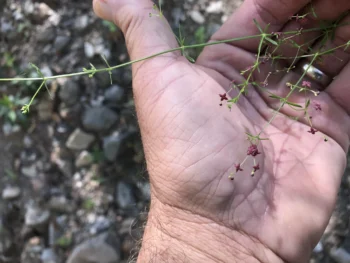
Wright’s Bedstraw: A Delicate Native Gem for Southwestern Gardens
If you’re looking to add some understated elegance to your native plant garden, Wright’s bedstraw (Galium wrightii) might just be the perfect choice. This charming little perennial brings a touch of delicate beauty to southwestern landscapes while supporting local ecosystems with minimal fuss.
What is Wright’s Bedstraw?
Wright’s bedstraw is a native perennial forb that belongs to the coffee family. As a non-woody herbaceous plant, it maintains its charm year after year without taking over your garden space. You might also see it listed under its botanical synonyms, including Galium frankliniense or Galium rothrockii, but they all refer to this same lovely southwestern native.
Where Does Wright’s Bedstraw Call Home?
This native beauty naturally occurs across the American Southwest, thriving in Arizona, California, Nevada, New Mexico, Texas, and Utah. It’s perfectly adapted to the unique growing conditions of these regions, making it an ideal choice for gardeners wanting to work with nature rather than against it.
- Species observed
- No observations
Why You’ll Love Growing Wright’s Bedstraw
Wright’s bedstraw offers several compelling reasons to earn a spot in your garden:
- Low-maintenance beauty: Once established, this drought-tolerant perennial requires minimal care
- Pollinator magnet: The small white flower clusters attract native bees and beneficial insects
- Fine texture: Its delicate, whorled leaves add interesting texture contrast to bolder plants
- Native authenticity: Perfect for authentic regional native plant gardens
- Versatile placement: Works well as ground cover or naturalized in larger landscapes
Perfect Garden Settings
Wright’s bedstraw shines in several garden styles:
- Native plant and wildlife gardens
- Xeriscape and drought-tolerant landscapes
- Rock gardens and natural areas
- Pollinator gardens
- Naturalized meadow-style plantings
Growing Conditions and Care
One of Wright’s bedstraw’s best qualities is how easygoing it is once you understand its preferences:
Hardiness: Thrives in USDA zones 7-10, perfectly matching its native southwestern range.
Sun and soil: Prefers well-draining soils and can handle anything from partial shade to full sun. Like many desert natives, it’s not fond of soggy conditions.
Water needs: Drought-tolerant once established, though it appreciates occasional deep watering during extreme dry spells.
Maintenance: Minimal care required. May self-seed in favorable conditions, which can be a bonus for naturalizing areas.
Important Conservation Note
Before you rush out to find Wright’s bedstraw, there’s something important to consider. This species has a conservation status that indicates some level of concern in certain areas. If you choose to grow Wright’s bedstraw, please ensure you source it from reputable nurseries that propagate plants responsibly rather than wild-collecting. This helps protect wild populations while still allowing you to enjoy this native beauty in your garden.
Planting and Establishment Tips
Getting Wright’s bedstraw established successfully is straightforward:
- Plant in well-draining soil – heavy clay or constantly moist conditions are not ideal
- Choose a location with good air circulation
- Water regularly during the first growing season to help establish roots
- Once established, reduce watering frequency but increase depth when you do water
- Mulch lightly around plants to retain moisture and suppress weeds
The Bottom Line
Wright’s bedstraw is an excellent choice for gardeners who appreciate subtle beauty and want to support native ecosystems. Its delicate flowers and fine foliage provide lovely textural interest while requiring minimal maintenance once established. Just remember to source your plants responsibly to help protect wild populations of this charming southwestern native.
Whether you’re creating a pollinator haven or simply want to add authentic regional character to your landscape, Wright’s bedstraw offers the perfect combination of beauty, ecological value, and low-maintenance charm that makes native gardening so rewarding.