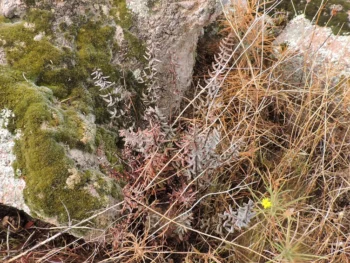
Wright’s Cliffbrake: A Delicate Native Fern for Rock Gardens
If you’re looking for a uniquely beautiful native fern that thrives in challenging rocky conditions, Wright’s cliffbrake (Pellaea wrightiana) might just be the perfect addition to your garden. This charming little fern brings an unexpected softness to harsh landscapes while requiring minimal care once established.
What is Wright’s Cliffbrake?
Wright’s cliffbrake is a native perennial fern that belongs to the cliff brake family. Don’t let the forb classification fool you – this plant exhibits classic fern characteristics with delicate, blue-green to gray-green fronds that create beautiful textural interest in the garden. Unlike many ferns that prefer moist, shaded conditions, this tough little species has adapted to life on rocky cliffs and dry slopes.
Where Does Wright’s Cliffbrake Grow Naturally?
This resilient fern is native to the lower 48 states and naturally occurs across Arizona, Colorado, New Mexico, North Carolina, Oklahoma, South Carolina, Texas, and Utah. It’s particularly at home in rocky, mountainous regions where it clings to cliff faces and rocky outcroppings with remarkable tenacity.
- Species observed
- No observations
Important Rarity Considerations
Before you rush to plant Wright’s cliffbrake, there’s something important to know: this species has a rarity status of S1 in Arkansas, meaning it’s critically imperiled in that state. If you’re interested in growing this beautiful fern, please ensure you source it responsibly from reputable native plant nurseries that propagate their stock rather than wild-collecting.
Why Grow Wright’s Cliffbrake?
Here’s what makes this fern special for gardeners:
- Drought tolerance: Once established, it requires minimal watering
- Unique texture: Adds delicate, fine-textured foliage to rock gardens
- Native status: Supports local ecosystems and requires less maintenance
- Compact size: Perfect for small spaces and rock crevices
- Low maintenance: Thrives on neglect once settled in
Perfect Garden Settings
Wright’s cliffbrake shines in specific garden types:
- Rock gardens and alpine gardens
- Xeriscaping and drought-tolerant landscapes
- Native plant gardens
- Naturalistic landscapes mimicking rocky habitats
- Container gardens with excellent drainage
Growing Conditions and Care
Success with Wright’s cliffbrake comes down to mimicking its natural habitat:
Light: Partial shade to full sun – this adaptable fern handles more sun than most ferns
Soil: The key to success is excellent drainage. Rocky, gravelly, or sandy soils work best. Heavy clay or constantly moist conditions will likely kill this plant.
Hardiness: Thrives in USDA zones 7-10, making it suitable for much of the southern and southwestern United States
Water: Drought tolerant once established, but benefits from occasional deep watering during extended dry periods
Planting and Care Tips
Getting Wright’s cliffbrake established requires attention to a few key details:
- Plant in spring or fall for best establishment
- Amend heavy soils with gravel, pumice, or coarse sand to improve drainage
- Water regularly the first growing season, then reduce watering significantly
- Mulch lightly with gravel rather than organic mulch
- Avoid fertilizing – this fern prefers lean conditions
- Plant in rock crevices or between stones for the most natural look
Wildlife and Ecosystem Benefits
While Wright’s cliffbrake doesn’t produce flowers for pollinators (it reproduces via spores like all ferns), it still contributes to native ecosystems by providing habitat structure and supporting the complex web of life that depends on native plants. Its presence helps maintain the biodiversity that makes native landscapes so valuable.
The Bottom Line
Wright’s cliffbrake is a fantastic choice for gardeners who want to incorporate native plants into challenging, dry locations. Its delicate beauty contrasts wonderfully with the harsh conditions it tolerates, making it a true garden gem. Just remember to source it responsibly and give it the well-draining conditions it craves. With proper placement, this charming fern will reward you with years of low-maintenance beauty while supporting your local ecosystem.