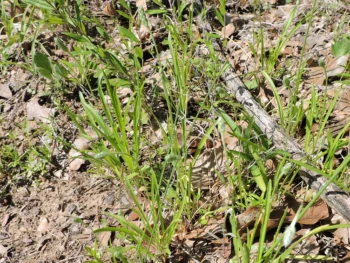
Wright’s Plantain: A Humble Native with Hidden Garden Value
Meet Wright’s plantain (Plantago wrightiana), a modest little native plant that might not win any beauty contests but deserves a spot in your native plant garden. This unassuming annual forb proves that sometimes the most valuable garden residents are the ones that work quietly behind the scenes, supporting local ecosystems while asking for very little in return.
What Is Wright’s Plantain?
Wright’s plantain is a low-growing annual forb—essentially an herbaceous flowering plant without woody stems. It forms small basal rosettes of narrow leaves and produces inconspicuous spikes of tiny greenish flowers. While it may not be the showstopper of your garden, this native plant has been quietly supporting American ecosystems across a surprisingly wide range of states.
Where Does It Call Home?
This resilient little plant is native to the lower 48 states and can be found growing naturally across a broad swath of the country, including Alabama, Arizona, Arkansas, Delaware, Florida, Georgia, Kansas, Kentucky, Louisiana, Maryland, Mississippi, Missouri, New Mexico, North Carolina, Oklahoma, South Carolina, Tennessee, Texas, Virginia, and West Virginia. That’s quite an impressive range for such a small plant!
- Species observed
- No observations
A Word of Caution: Rarity Status
Here’s something important to keep in mind: Wright’s plantain has a rarity status of S1 in Arkansas, meaning it’s critically imperiled in that state. If you’re interested in adding this plant to your garden, please make sure to source seeds or plants responsibly from reputable native plant nurseries that don’t collect from wild populations. Never collect seeds or plants from the wild, especially in areas where the species might be rare.
Why Consider Wright’s Plantain for Your Garden?
While Wright’s plantain won’t provide dramatic visual impact, it offers several benefits that make it worth considering:
- Supports native pollinators with its small but accessible flowers
- Extremely low maintenance once established
- Thrives in poor, sandy, or disturbed soils where other plants struggle
- Perfect for naturalistic garden areas and habitat restoration projects
- Contributes to local biodiversity
Growing Wright’s Plantain Successfully
The good news is that Wright’s plantain is refreshingly easy to grow, as long as you understand its preferences:
Climate and Hardiness: This plant thrives in USDA hardiness zones 7-10, making it suitable for much of the southern and southwestern United States.
Light Requirements: Wright’s plantain prefers full sun to partial shade, making it quite adaptable to different garden locations.
Soil Preferences: This tough little plant actually prefers sandy or disturbed soils and tolerates poor growing conditions. Don’t pamper it with rich, amended soil—it’s happiest when things are a bit rough around the edges.
Planting: Since it’s an annual, direct seeding is your best bet. Sow seeds in fall or early spring when temperatures are cool. Simply scatter seeds over prepared soil and lightly rake them in.
Care: Once established, Wright’s plantain requires minimal care. It’s drought-tolerant and doesn’t need fertilization. In fact, too much care might actually harm this independent little plant.
Garden Design Ideas
Wright’s plantain works best in:
- Native plant gardens focused on local ecology
- Naturalized areas where you want to support wildlife
- Restoration projects for disturbed sites
- Pollinator gardens (as a supporting player rather than the main attraction)
- Areas with poor soil where other plants struggle
The Bottom Line
Wright’s plantain may not be the most glamorous choice for your garden, but it’s a dependable native that supports local ecosystems while requiring virtually no maintenance. If you’re creating a naturalistic native garden or working on habitat restoration, this humble plant could be exactly what you need. Just remember to source it responsibly and appreciate it for what it is—a small but important piece of America’s natural heritage.
Sometimes the best garden residents are the ones that do their jobs quietly and efficiently, and Wright’s plantain fits that description perfectly.