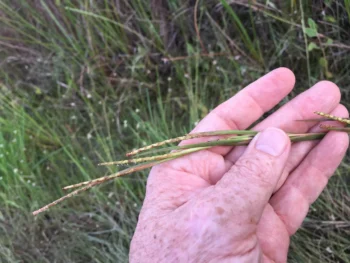
Wrinkled Jointtail Grass: A Rare Native Grass for Wetland Gardens
If you’re looking to add authentic native character to your wetland garden or rain garden, wrinkled jointtail grass (Coelorachis rugosa) might just be the understated gem you’ve been searching for. This perennial grass may not win any beauty contests, but it plays a crucial ecological role in southeastern wetland ecosystems and offers unique benefits for the right garden setting.
What Makes Wrinkled Jointtail Grass Special
Wrinkled jointtail grass is a native perennial grass that belongs to the diverse world of graminoids – the grass and grass-like plant family. You might also see it listed under its scientific synonyms Manisuris rugosa or Mnesithea rugosa in older gardening references, but don’t let the name changes confuse you – it’s the same plant.
This fine-textured grass grows in distinctive bunches and reaches about 2 feet tall at maturity, making it a perfect mid-height addition to native plant communities. Its growth rate is moderate, so you won’t need to worry about it taking over your garden overnight.
Where Wrinkled Jointtail Grass Calls Home
This grass is native to the southeastern United States, naturally occurring across 13 states from Texas all the way up the Atlantic coast to New Jersey. You’ll find it growing wild in Alabama, Arkansas, Delaware, Florida, Georgia, Louisiana, Maryland, Mississippi, North Carolina, South Carolina, Texas, and Virginia.
- Species observed
- No observations
A Word of Caution: This Plant is Rare
Important conservation note: Wrinkled jointtail grass is becoming increasingly rare across its native range. In Arkansas, it’s classified as S2 (imperiled), and in New Jersey, it’s listed as endangered with S1 status (critically imperiled). If you’re interested in growing this species, please only source it from reputable native plant nurseries that propagate it responsibly – never collect it from the wild.
Is Wrinkled Jointtail Grass Right for Your Garden?
This grass isn’t for everyone, and that’s perfectly okay! Here’s who should consider it:
- Wetland garden enthusiasts: This grass is classified as an obligate wetland plant in most regions, meaning it almost always occurs in wetlands
- Conservation-minded gardeners: Growing rare native species helps preserve genetic diversity
- Rain garden designers: Perfect for areas that stay consistently moist
- Native ecosystem restorers: Essential for authentic southeastern wetland plant communities
However, if you’re looking for showy flowers or dramatic foliage, this might not be your plant. The small white flowers bloom in late summer but aren’t particularly conspicuous, and the green foliage, while attractive in its own subtle way, won’t stop traffic.
Growing Conditions: Keep It Wet and Wild
Wrinkled jointtail grass has some specific preferences that reflect its wetland origins:
- Moisture: Needs consistent moisture – drought tolerance is low
- Soil: Adapts well to fine and medium-textured soils but struggles in coarse, sandy soils
- pH: Prefers acidic conditions (pH 5.0-7.0)
- Sun exposure: Intermediate shade tolerance, but grows best in full sun to partial shade
- Climate: Requires at least 150 frost-free days and annual precipitation between 45-80 inches
This grass thrives in USDA hardiness zones 7-10, making it suitable for most of the southeastern United States where it naturally occurs.
Planting and Care Tips
Growing wrinkled jointtail grass successfully requires patience and the right approach:
- Propagation: Seed is the primary method, but don’t expect instant gratification – seedling vigor is low and spread rate is slow
- When to plant: Late summer blooming means fall seed collection and spring planting work best
- Soil preparation: Ensure consistent moisture retention – this isn’t a plant and forget species
- Maintenance: Once established, it requires minimal fertilization (low fertility requirement) and has moderate regrowth after cutting
- Patience required: With 275,000 seeds per pound but low abundance and persistence, establishment takes time
Ecological Benefits
While we don’t have specific data on wildlife benefits for this species, native wetland grasses like wrinkled jointtail grass typically provide important ecosystem services. They help stabilize soil in wet areas, provide habitat structure for small wildlife, and contribute to the complex web of native plant communities that support biodiversity.
The Bottom Line
Wrinkled jointtail grass isn’t the flashiest choice for your garden, but it’s a meaningful one. If you have the right conditions – consistent moisture, acidic soil, and patience – and you’re passionate about growing rare native species responsibly, this grass can be a valuable addition to your wetland garden or native plant collection.
Just remember: source responsibly, plant with purpose, and appreciate the quiet beauty of this increasingly rare native grass. Sometimes the most important plants in our gardens are the ones that work behind the scenes to support the bigger ecological picture.