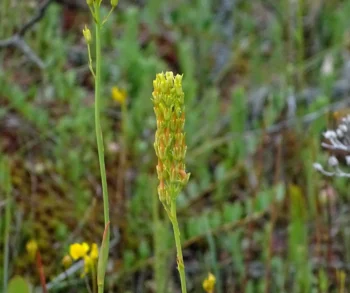
Yellow Asphodel: A Rare Wetland Gem You Probably Shouldn’t Grow
Meet yellow asphodel (Narthecium americanum), one of North America’s most elusive and specialized wetland plants. While its cheerful name might make it sound like a perfect addition to your garden, this little-known native has some serious conservation concerns that every gardener should understand before considering it for their landscape.
What Makes Yellow Asphodel Special?
Yellow asphodel is a perennial forb that belongs to a very exclusive club of North American natives. This grass-like plant produces delicate spikes of small yellow flowers that rise 1-2 feet above narrow, sword-shaped leaves. Unlike its more common garden cousins, this plant has evolved to thrive in very specific wetland conditions that are increasingly rare in our landscape.
Where Does Yellow Asphodel Call Home?
This native species has a surprisingly limited range, naturally occurring in just five states along the Atlantic coast: Delaware, Maryland, New Jersey, North Carolina, and South Carolina. It’s primarily found in the unique ecosystem of pine barrens, bog edges, and other specialized wetland habitats.
- Species observed
- No observations
The Conservation Reality Check
Here’s where things get serious: yellow asphodel is considered imperiled with a Global Conservation Status of S2. In New Jersey, it’s actually listed as Endangered. This means there are likely only 6-20 known populations remaining, with fewer than 3,000 individual plants in existence. Some regions even list it as presumed extirpated, meaning it may have disappeared entirely from areas where it once grew.
What does this mean for gardeners? Simply put, this isn’t a plant you should be casually adding to your shopping list.
Growing Conditions: Why It’s So Challenging
Yellow asphodel isn’t just rare because of habitat loss—it’s also incredibly picky about where it lives. This plant requires:
- Consistently moist to wet, acidic soils
- Sandy or peaty soil conditions
- Full sun to partial shade
- Specialized wetland chemistry that’s hard to replicate
As a facultative wetland species, it usually grows in wetland conditions but can occasionally tolerate slightly drier sites. However, recreating these specific bog-like conditions in a typical garden setting is extremely difficult and often unsuccessful.
The Responsible Gardener’s Approach
If you’re passionate about supporting this rare species, here are better ways to help:
- Support conservation organizations working to protect remaining populations
- Visit it in nature at places like New Jersey’s Pine Barrens (where it’s protected)
- Choose appropriate alternatives for your wetland garden
- Spread awareness about the importance of wetland conservation
If you absolutely must grow yellow asphodel, only source it from specialized native plant nurseries that can verify their stock comes from ethically propagated, not wild-collected, plants.
Better Alternatives for Your Wetland Garden
Instead of yellow asphodel, consider these more common native wetland plants that offer similar appeal:
- Blue flag iris (Iris versicolor)
- Swamp milkweed (Asclepias incarnata)
- Cardinal flower (Lobelia cardinalis)
- Wild bergamot (Monarda fistulosa)
These alternatives will give you beautiful wetland color while supporting pollinators—without putting pressure on an already vulnerable species.
The Bottom Line
Yellow asphodel represents something precious in our natural world: a specialized native plant that has survived in specific habitats for thousands of years. While it’s tempting to want to grow every beautiful native we encounter, sometimes the most loving thing we can do is leave rare plants in their natural homes and support their conservation from afar.
Focus your native plant energy on more common species that need our gardens to thrive, and let yellow asphodel continue its quiet existence in the wild places where it belongs.