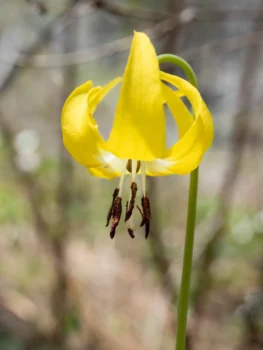
Yellow Avalanche-lily: A Cheerful Native Spring Beauty for Your Garden
If you’ve ever dreamed of having bright yellow blooms peeking through the last patches of snow in your garden, the yellow avalanche-lily might just be your perfect spring companion. This charming native wildflower brings a splash of sunshine to the garden when most other plants are still sleeping through winter’s final days.
What is Yellow Avalanche-lily?
Yellow avalanche-lily (Erythronium grandiflorum grandiflorum) is a native North American perennial that belongs to the lily family. Don’t let the scientific name intimidate you – this little beauty is actually quite straightforward to understand and appreciate. As a forb (basically a non-woody flowering plant), it dies back to the ground each year and returns reliably each spring from underground bulbs.
This delightful wildflower is native to both Canada and the lower 48 United States, making it a fantastic choice for gardeners who want to support local ecosystems with indigenous plants.
Where Does It Grow Naturally?
Yellow avalanche-lily has quite an impressive range across western North America. You’ll find it naturally growing in Alberta, British Columbia, California, Colorado, Idaho, Montana, New Mexico, Oregon, Utah, Washington, and Wyoming. It’s particularly at home in mountainous regions where it can enjoy cool, moist conditions.
- Species observed
- No observations
Why You’ll Love This Spring Stunner
There are several compelling reasons to consider adding yellow avalanche-lily to your garden:
- Early bloom time: It flowers in early spring, often while snow is still on the ground, providing much-needed color when your garden is just waking up
- Native plant benefits: Supporting local wildlife and maintaining regional biodiversity
- Pollinator magnet: Early-emerging bees, butterflies, and other pollinators rely on these early nectar sources
- Low maintenance: Once established, it requires minimal care
- Naturalizing ability: Perfect for creating drifts of spring color in woodland settings
Perfect Garden Companions and Placement
Yellow avalanche-lily shines brightest in woodland gardens, native plant landscapes, and rock gardens. It’s particularly stunning when allowed to naturalize in drifts under deciduous trees or among other spring ephemeral wildflowers. The key is creating a setting that mimics its natural mountain habitat – think cool, partially shaded spots with good drainage.
Growing Conditions and Care
This mountain native has some specific preferences that are important to understand:
- Light: Partial shade to dappled sunlight works best
- Soil: Cool, moist, well-draining soil is essential
- Climate: Thrives in USDA hardiness zones 3-8, depending on your specific location
- Water: Appreciates consistent moisture during its growing season but goes dormant in summer
Planting and Establishment Tips
Getting yellow avalanche-lily established requires a bit of patience, but the results are worth it:
- Plant bulbs in fall for spring blooms
- The bulbs need a cold winter period to bloom properly
- Choose a location that stays relatively cool and moist
- Allow the foliage to die back naturally – this feeds the bulb for next year’s show
- Be patient – newly planted bulbs may take a year or two to become fully established
Important Conservation Note
Yellow avalanche-lily has a conservation status that suggests we should be mindful about how we source our plants. If you decide to grow this beauty, make sure you purchase bulbs from reputable nurseries that propagate their own stock rather than wild-collecting. Never dig plants from the wild – this threatens natural populations and is often illegal on public lands.
Wildlife Benefits
Beyond its obvious beauty, yellow avalanche-lily serves an important ecological role. As one of the earliest spring bloomers, it provides crucial nectar and pollen for emerging pollinators who have few other food sources available. This makes it an excellent choice for gardeners interested in supporting biodiversity and creating habitat for beneficial insects.
Is Yellow Avalanche-lily Right for Your Garden?
This native charmer is ideal for gardeners who:
- Want to support native ecosystems
- Enjoy early spring garden interest
- Have partially shaded areas with good drainage
- Appreciate low-maintenance plants
- Want to provide early-season pollinator resources
However, it might not be the best choice if you’re looking for continuous summer color, as this plant goes dormant after spring. But for those magical few weeks when it’s in bloom, yellow avalanche-lily provides an unmatched display of cheerful spring beauty that connects your garden to the wild landscapes where it naturally thrives.