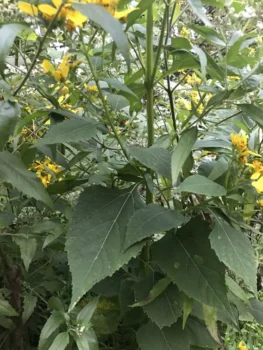
Yellow Crownbeard: A Towering Native Wildflower for Late-Season Gardens
If you’re looking for a native wildflower that brings serious height and late-season pizzazz to your garden, meet yellow crownbeard (Verbesina occidentalis). This impressive perennial forb might not win any awards for subtlety, but it definitely knows how to make a statement when most other flowers are calling it quits for the year.
What Is Yellow Crownbeard?
Yellow crownbeard is a robust native perennial that belongs to the sunflower family. Don’t let the crownbeard name fool you into thinking it’s some sort of facial hair for royalty – it gets its quirky common name from the papery scales that crown its seeds. This tall, sturdy plant is classified as a forb, meaning it’s an herbaceous flowering plant without woody stems above ground.
One of the most distinctive features of yellow crownbeard is its winged stems, which look like someone attached little green fins along the length of each stalk. These wings, combined with its towering height of 3 to 10 feet, make it impossible to miss in the landscape.
Where Yellow Crownbeard Calls Home
This native beauty has quite an impressive range across the eastern and southeastern United States. You’ll find yellow crownbeard growing naturally in Alabama, Delaware, District of Columbia, Florida, Georgia, Illinois, Kentucky, Louisiana, Maryland, Mississippi, Missouri, North Carolina, Ohio, Oklahoma, Pennsylvania, South Carolina, Tennessee, Texas, Virginia, and West Virginia.
- Species observed
- No observations
Why Plant Yellow Crownbeard?
There are several compelling reasons to consider adding this native giant to your garden:
- Pollinator magnet: The bright yellow, daisy-like flowers are irresistible to bees, butterflies, and other beneficial insects, especially important since it blooms from late summer into fall when many other nectar sources have faded
- Low maintenance: Once established, yellow crownbeard is remarkably self-sufficient and drought tolerant
- Native credentials: As a true native plant, it supports local ecosystems and requires no special pampering to thrive
- Late-season interest: When your garden is looking tired in September and October, yellow crownbeard is just hitting its stride
- Wildlife value: Beyond pollinators, the seeds provide food for birds, and the plant offers habitat for beneficial insects
The Not-So-Great News
Before you get too excited, there are a few things to consider. Yellow crownbeard is an enthusiastic self-seeder, which means it can spread more than you might want in a formal garden setting. It’s also quite tall and can look a bit gangly if not properly placed. Think of it as the friendly giant of the plant world – wonderful to have around, but you need to give it the right spot.
Perfect Garden Situations
Yellow crownbeard shines in:
- Wildflower gardens and naturalized areas
- Prairie restorations and native plant landscapes
- Back borders where its height can be an asset
- Pollinator gardens focused on late-season blooms
- Informal cottage-style gardens
- Areas where you want to fill space with minimal effort
Growing Conditions and Care
The beauty of yellow crownbeard lies in its adaptability. This plant has a facultative upland wetland status, meaning it usually prefers non-wetland conditions but can tolerate some moisture. Here’s what it needs to thrive:
- Light: Full sun to partial shade (though it may get a bit floppy in too much shade)
- Soil: Adaptable to various soil types, from moist to dry conditions
- Hardiness: Thrives in USDA zones 5-9
- Water: Drought tolerant once established, but appreciates occasional watering during dry spells
Planting and Care Tips
Growing yellow crownbeard successfully is refreshingly straightforward:
- Planting: Start from seed in spring or fall, or plant nursery-grown seedlings in spring after the last frost
- Spacing: Give plants 2-3 feet of space – they’ll need room to spread their wings (literally!)
- Maintenance: Minimal care required once established. You can cut plants back after blooming if you want to prevent excessive self-seeding
- Management: If it spreads too enthusiastically, simply pull up unwanted seedlings in spring when they’re easy to identify
- Winter care: Leave stems standing through winter to provide seed for birds, then cut back in early spring
The Bottom Line
Yellow crownbeard is like that friend who’s always there when you need them – reliable, cheerful, and not too demanding of your time. If you have space for a tall, late-blooming native that supports pollinators and adds vertical interest to your garden, this could be your new best friend. Just make sure you’re ready for its enthusiasm and give it room to do its thing. In return, you’ll get months of bright blooms when the rest of your garden is winding down for the season.