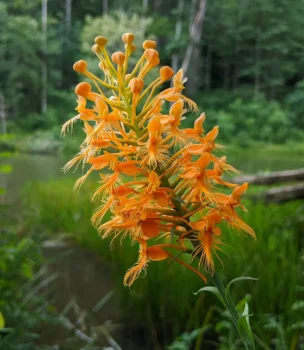
Yellow Fringed Orchid: A Rare Native Beauty Worth the Challenge
If you’ve ever dreamed of growing a truly spectacular native orchid in your garden, the yellow fringed orchid might just be your holy grail. This stunning perennial wildflower brings a touch of exotic elegance to native plant gardens while supporting local ecosystems—but it comes with some important considerations every gardener should know.
What Makes Yellow Fringed Orchid Special
Known botanically as Platanthera ciliaris, the yellow fringed orchid is a showstopper that’s impossible to ignore when it blooms. Despite its name suggesting yellow flowers, this beauty actually produces brilliant orange-yellow blooms arranged in dense, cylindrical spikes that can reach up to 6 inches long. The flowers feature distinctively fringed petals that give the plant its common name and create an almost flame-like appearance that’s absolutely mesmerizing.
As a forb (a non-woody flowering plant), this perennial orchid grows from underground tubers and typically reaches 1-4 feet in height. You might also encounter it listed under its synonyms Blephariglotis ciliaris or Habenaria ciliaris in older gardening references.
Where Yellow Fringed Orchid Calls Home
This native beauty has quite an impressive range across eastern North America. You’ll find wild populations scattered across numerous states including Alabama, Arkansas, Connecticut, Delaware, Florida, Georgia, Illinois, Indiana, Kentucky, Louisiana, Maryland, Massachusetts, Michigan, Mississippi, Missouri, New Hampshire, New Jersey, New York, North Carolina, Ohio, Oklahoma, Pennsylvania, Rhode Island, South Carolina, Tennessee, Texas, Vermont, Virginia, and West Virginia, plus Ontario in Canada.
- Species observed
- No observations
The Rarity Reality Check
Here’s where things get serious: yellow fringed orchid isn’t just any native plant. In New Jersey, it’s classified as Listed Pinelands, Highlands Listed, S2, indicating it’s quite rare in the state. This rarity status is a crucial consideration for any gardener interested in growing this species.
If you’re determined to add this orchid to your garden, you absolutely must source it responsibly. Never dig plants from the wild—this can devastate already vulnerable populations. Instead, seek out nurseries that propagate from ethically collected seeds or work with conservation programs.
Perfect Garden Settings
Yellow fringed orchid isn’t your typical garden center perennial, and it has some pretty specific preferences. This plant thrives in:
- Native wildflower gardens
- Bog or wetland gardens
- Prairie restoration projects
- Naturalized landscape areas
- Rain gardens with consistent moisture
It’s classified as Facultative Wetland across all regions where it grows, meaning it usually prefers wetland conditions but can occasionally tolerate drier sites. Think of it as a plant that loves to keep its feet wet most of the time.
Growing Conditions That Make It Happy
Successfully growing yellow fringed orchid requires mimicking its natural habitat preferences:
- Moisture: Consistently moist to wet, acidic soils
- Light: Full sun to partial shade (morning sun with afternoon protection works well)
- Soil: Acidic, organic-rich soil that doesn’t dry out
- Climate: Hardy in USDA zones 4-9
- Drainage: Tolerates seasonal flooding but needs some drainage
Planting and Care Tips
Growing yellow fringed orchid successfully requires patience and attention to detail:
- Plant in spring after the last frost date
- Maintain consistent soil moisture throughout the growing season
- Apply organic mulch to retain moisture and suppress weeds
- Avoid disturbing the roots once established—orchids form important relationships with soil fungi
- Be patient—it may take several years to establish and bloom reliably
- Consider growing from seed rather than transplanting, as orchids can be finicky about moving
Wildlife and Pollinator Benefits
The brilliant orange-yellow blooms aren’t just eye candy for gardeners—they’re specifically evolved to attract butterflies and skippers. These important pollinators are drawn to the bright colors and nectar rewards, making yellow fringed orchid a valuable addition to any pollinator garden. The timing of its summer blooms provides crucial resources when many spring flowers have finished.
The Bottom Line
Yellow fringed orchid is undeniably gorgeous and ecologically valuable, but it’s not a plant for beginners or casual gardeners. Its rarity status means you have a responsibility to source it ethically, and its specific growing requirements mean you need to be prepared to provide consistent moisture and appropriate conditions.
If you’re up for the challenge and can provide the right growing environment, this native orchid will reward you with some of the most spectacular blooms you’ll ever see in a North American garden. Just remember: with rare plants comes great responsibility. Always choose conservation over convenience, and your garden—and local ecosystems—will be better for it.