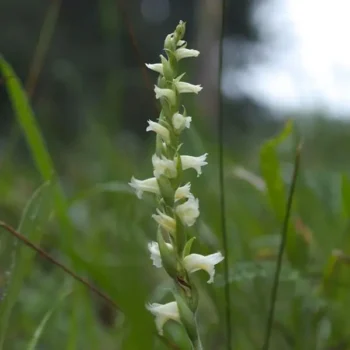
Yellow Nodding Lady’s Tresses: A Delicate Native Orchid Worth Protecting
If you’ve ever dreamed of growing native orchids in your garden, yellow nodding lady’s tresses (Spiranthes ochroleuca) might just capture your heart. This charming perennial orchid brings an understated elegance to native plant gardens with its graceful spiraling flowers and fascinating growth habits.
What Makes Yellow Nodding Lady’s Tresses Special
Yellow nodding lady’s tresses is a native North American orchid that produces delicate spikes of small, white to yellowish-white flowers arranged in an elegant spiral pattern. As a perennial forb, this herbaceous plant lacks woody stems but returns year after year from underground structures. The flowers have a subtle nodding habit, which gives this species part of its common name.
You might also encounter this plant listed under its botanical synonyms, including Spiranthes cernua var. ochroleuca or Spiranthes ×steigeri, but Spiranthes ochroleuca is the currently accepted name.
Where It Calls Home
This native orchid has an impressive range across eastern North America. You’ll find yellow nodding lady’s tresses growing naturally from southeastern Canada down through much of the eastern United States. Its range includes the Maritime provinces of New Brunswick, Nova Scotia, and Prince Edward Island, as well as Ontario. In the United States, it spans from Maine down to North Carolina and Tennessee, and west to states like Michigan, Wisconsin, Indiana, and Ohio.
- Species observed
- No observations
A Word of Caution: Rarity Matters
Before you fall completely in love with this orchid, there’s something important to know. Yellow nodding lady’s tresses has a rarity status in some areas—it’s listed as S3 (vulnerable) in New Jersey’s Highlands region. This means the plant faces some risk in the wild, making responsible sourcing absolutely critical if you choose to grow it.
If you decide to add this native orchid to your garden, please ensure you purchase plants from reputable native plant nurseries that propagate their stock rather than wild-collecting. Never harvest plants from the wild, as this could further threaten local populations.
Growing Conditions and Care
Yellow nodding lady’s tresses thrives in USDA hardiness zones 3 through 8, making it suitable for much of the northern and central United States. Like many native orchids, it can be somewhat particular about its growing conditions:
- Prefers consistently moist to wet soils
- Tolerates both partial shade and full sun
- Favors acidic soil conditions
- Benefits from organic matter in the soil
- Requires good drainage despite preferring moist conditions
Be prepared for a bit of patience when establishing this orchid. Native orchids can be challenging to grow and may take time to settle into their new home. Consistent moisture is key—think of the moist meadows and woodland edges where this plant naturally occurs.
Perfect Garden Settings
Yellow nodding lady’s tresses shines in naturalistic garden settings rather than formal landscapes. Consider incorporating it into:
- Native plant gardens focused on regional flora
- Meadow-style plantings with other native wildflowers
- Woodland edge gardens with dappled sunlight
- Rain gardens or other moisture-retentive areas
- Specialty orchid collections (with proper care)
Supporting Pollinators
While small in stature, yellow nodding lady’s tresses punches above its weight when it comes to supporting native pollinators. The spiral arrangement of tiny flowers attracts various native bees, small butterflies, and other beneficial insects. Native orchids like this one have co-evolved with local pollinators over thousands of years, making them particularly valuable for supporting regional biodiversity.
The Bottom Line
Yellow nodding lady’s tresses offers native plant enthusiasts a chance to grow a truly special orchid while supporting local ecosystems. Its delicate beauty and pollinator benefits make it a worthwhile addition to the right garden setting. However, its rarity status means you should only consider growing it if you can source plants responsibly from ethical propagators.
If you’re new to growing native orchids, this species might challenge you, but the reward of successfully cultivating this charming native could be worth the effort. Just remember: admire it, protect it, and always source it responsibly.