Yellow Pincushion: A Charming Native Annual for Water-Wise Gardens
Meet the yellow pincushion (Chaenactis glabriuscula var. lanosa), a delightful native wildflower that brings sunshine and texture to drought-tolerant landscapes. This charming annual forb might be small in stature, but it packs a big punch when it comes to adding color and supporting local wildlife in your garden.
What Makes Yellow Pincushion Special?
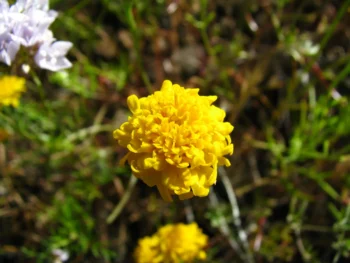
Yellow pincushion earned its common name from its distinctive flower heads that look exactly like tiny, bright yellow pincushions dotted across the landscape. The soft, woolly texture of the entire plant gives it an almost fuzzy appearance that’s irresistible to touch. As a member of the sunflower family, this little beauty produces clusters of small, densely packed flowers that create those characteristic rounded, cushion-like blooms.
This native California wildflower is an annual forb, meaning it completes its entire life cycle in one growing season and lacks woody stems. Don’t let its delicate appearance fool you—yellow pincushion is surprisingly tough and well-adapted to challenging growing conditions.
Where Does Yellow Pincushion Call Home?
Yellow pincushion is proudly native to California, where it has evolved to thrive in the state’s diverse desert and semi-arid environments. You might spot it growing wild in sandy washes, rocky slopes, and open areas throughout its native range.
- Species observed
- No observations
Why Grow Yellow Pincushion in Your Garden?
There are several compelling reasons to consider adding yellow pincushion to your landscape:
- Native plant benefits: As a California native, it supports local ecosystems and requires less water than non-native alternatives
- Pollinator magnet: The bright yellow flowers attract bees, butterflies, and other beneficial insects
- Water-wise gardening: Once established, it thrives with minimal irrigation
- Unique texture: The woolly, soft appearance adds interesting contrast to other plants
- Low maintenance: As an annual, it self-seeds and returns each year with little effort
Perfect Garden Companions
Yellow pincushion shines brightest in water-wise and native plant gardens. It’s perfectly suited for:
- Desert and xeriscape gardens
- Rock gardens and gravelly areas
- Wildflower meadows
- Native plant landscapes
- Pollinator gardens
This charming annual works wonderfully as a ground cover or filler plant, weaving between larger perennials and shrubs to create a naturalistic look.
Growing Yellow Pincushion Successfully
Yellow pincushion is surprisingly easy to grow when you understand its preferences. This hardy little plant thrives in USDA hardiness zones 8-10, making it suitable for most of California and similar climates.
Light and Soil Requirements
Give your yellow pincushion full sun exposure for the best flowering display. It absolutely loves well-draining, sandy or rocky soils—the kind of conditions that would challenge many other garden plants. Heavy clay or constantly moist soils are not its friends.
Planting Tips
The easiest way to establish yellow pincushion is by direct sowing seeds in fall or early spring. Simply scatter the seeds over prepared soil and lightly rake them in. Don’t bury them too deeply—they need some light to germinate properly.
Watering and Care
Here’s where yellow pincushion really shines: it’s incredibly drought tolerant once established. During its first growing season, provide occasional deep watering to help it get established. After that, natural rainfall should be sufficient in most years. Overwatering can actually harm this desert-adapted beauty.
A Note on Conservation
Yellow pincushion has a conservation status that suggests some populations may need protection. If you’re planning to grow this lovely native, please source your seeds or plants from reputable native plant nurseries that use responsibly collected material. This helps ensure wild populations remain healthy while you enjoy this beautiful plant in your garden.
The Bottom Line
Yellow pincushion is a wonderful choice for gardeners seeking to create water-wise landscapes that support native wildlife. Its cheerful yellow blooms, unique texture, and easy-care nature make it a delightful addition to the right garden setting. While it may not be suitable for formal gardens or areas requiring consistent moisture, it’s absolutely perfect for anyone looking to embrace the natural beauty and resilience of California’s native flora.
Give yellow pincushion a try in your drought-tolerant garden—you might just find yourself enchanted by these tiny golden cushions of sunshine!