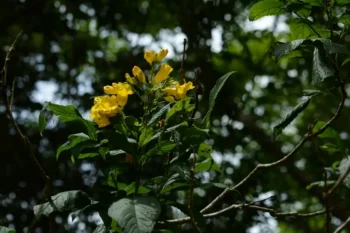
Yellow Trumpetbush: A Bright and Bold Addition to Warm-Climate Gardens
If you’re looking for a shrub that delivers months of cheerful, golden blooms with minimal fuss, the yellow trumpetbush (Tecoma stans) might just be your new garden favorite. This fast-growing perennial shrub brings tropical vibes to landscapes with its trumpet-shaped flowers that seem to glow in the sunlight.
What Is Yellow Trumpetbush?
Yellow trumpetbush is a multi-stemmed woody shrub that typically grows 13-20 feet tall, though it can sometimes reach greater heights under ideal conditions. True to its name, this plant produces clusters of bright yellow, trumpet-shaped flowers that are absolutely stunning when in full bloom. The blooms appear almost continuously during the growing season, making it a real showstopper in the garden.
You might also see this plant referenced by its botanical synonyms, including Bignonia stans or Stenolobium stans, but Tecoma stans is the currently accepted scientific name.
Native Status and Where It Grows
Here’s where things get interesting with yellow trumpetbush – its native status varies significantly depending on where you are. This plant is native to Arizona, New Mexico, Texas, Puerto Rico, and the U.S. Virgin Islands. However, it’s been introduced and now grows wild in Florida, Hawaii, Guam, and Palau, where it reproduces without human intervention.
- Species observed
- No observations
If you’re gardening in areas where yellow trumpetbush isn’t native, you might want to consider supporting your local ecosystem by choosing native alternatives that provide similar benefits to wildlife and pollinators.
Why Gardeners Love (or Don’t Love) Yellow Trumpetbush
There’s a lot to appreciate about this vibrant shrub:
- Nearly year-round blooming in warm climates
- Extremely drought tolerant once established
- Fast growth rate – perfect for impatient gardeners
- Attracts hummingbirds, butterflies, and bees
- Low maintenance requirements
- Can be pruned and shaped as needed
However, keep in mind that this plant can spread and self-seed readily, which is why it’s established itself beyond its native range. While its invasive status isn’t definitively documented, responsible gardening means being mindful of plants that might escape cultivation.
Perfect Garden Settings
Yellow trumpetbush absolutely shines in:
- Desert and xeriscape gardens
- Mediterranean-style landscapes
- Informal hedges and screens
- Specimen plantings where you want a focal point
- Pollinator gardens in warm climates
Its erect, multiple-stem growth form and fine-textured green foliage provide nice structure even when not in bloom, though let’s be honest – with its extended flowering period, it’s rarely not in bloom!
Growing Conditions That Make It Happy
Yellow trumpetbush is refreshingly easy to please, especially if you live in a warm, dry climate. Here’s what it prefers:
- Sunlight: Full sun (it’s quite shade intolerant)
- Soil: Well-draining soils; adaptable to coarse and medium-textured soils but not heavy clay
- Water: Low water needs once established – perfect for drought-prone areas
- pH: Tolerates slightly acidic to slightly alkaline soils (6.5-8.0)
- Temperature: Hardy in USDA zones 8b-11 (can tolerate temperatures down to about 17°F)
This plant almost never occurs in wetlands, preferring well-drained upland sites. It’s also quite tolerant of limestone soils, making it suitable for many challenging garden situations.
Planting and Care Tips
Getting yellow trumpetbush established is typically straightforward:
- When to plant: Spring after the last frost, when you have at least 200 frost-free days ahead
- Spacing: Allow 6-8 feet between plants for mature spread
- Watering: Water regularly the first year, then reduce to minimal supplemental watering
- Fertilizing: Low fertility requirements – avoid over-fertilizing
- Pruning: Can be pruned to maintain size and shape; responds well to coppicing
The plant can be propagated through seeds (which are abundant), cuttings, bare root, or container plants. Seeds are tiny – there are about 100,000 seeds per pound!
Wildlife and Pollinator Benefits
One of the most delightful aspects of yellow trumpetbush is watching it come alive with visiting wildlife. The bright yellow, tubular flowers are perfectly designed for hummingbirds, and you’ll likely see these tiny acrobats visiting regularly during bloom time. Butterflies and bees also appreciate the nectar-rich flowers, making this shrub a valuable addition to pollinator-friendly gardens.
The Bottom Line
Yellow trumpetbush offers a lot of bang for your buck – brilliant color, low maintenance, and wildlife appeal in one fast-growing package. If you’re in its native range, it’s an excellent choice for adding reliable color to challenging, dry sites. In areas where it’s not native, consider it carefully and perhaps explore native alternatives that could provide similar benefits while supporting your local ecosystem. Either way, this cheerful shrub certainly knows how to make a statement in the landscape!