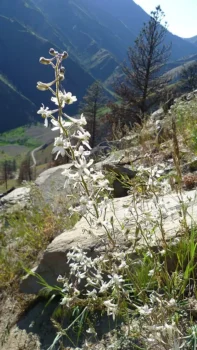
Yellow White Larkspur: A Rare Pacific Northwest Treasure
Have you ever heard of yellow white larkspur? If not, you’re not alone. This incredibly rare perennial wildflower, scientifically known as Delphinium xantholeucum, is one of the Pacific Northwest’s best-kept secrets – mainly because it’s so hard to find!
What Makes Yellow White Larkspur Special?
Yellow white larkspur is a native perennial forb that belongs to the buttercup family. As a forb, it’s an herbaceous plant that lacks woody tissue above ground, putting all its energy into those gorgeous flower displays that make Delphiniums so beloved by gardeners.
But here’s where things get interesting (and a bit concerning): this particular larkspur is extremely rare. It holds a Global Conservation Status of S3, meaning it’s considered vulnerable throughout its range. With only an estimated 21 to 100 occurrences and between 3,000 to 10,000 individuals remaining in the wild, this plant is truly a botanical treasure.
Where Does It Call Home?
Yellow white larkspur is native to the lower 48 states, but its distribution is remarkably limited. Currently, it’s only known to exist in Washington state, making it a true Pacific Northwest endemic.
- Species observed
- No observations
Should You Grow Yellow White Larkspur?
Here’s where we need to have an honest conversation. While the idea of growing such a rare native plant might be appealing, there are some important considerations:
The Rarity Factor
Due to its vulnerable conservation status, yellow white larkspur should only be planted if you can source it responsibly. This means:
- Never collecting seeds or plants from wild populations
- Only purchasing from reputable nurseries that propagate from legally obtained, ethically sourced material
- Understanding that finding this plant commercially may be nearly impossible
The Growing Challenge
Unfortunately, there’s very limited information available about the specific growing requirements for Delphinium xantholeucum. This lack of cultivation knowledge makes it challenging even for experienced gardeners to grow successfully.
What we do know is that it’s a perennial that would likely prefer conditions similar to other Pacific Northwest native wildflowers, but without specific guidance on soil requirements, water needs, sun exposure, or USDA hardiness zones, growing this plant becomes a bit of a botanical adventure.
Alternative Native Options
If you’re drawn to the idea of growing native Delphiniums or similar Pacific Northwest wildflowers, consider these more readily available alternatives:
- Western larkspur (Delphinium nuttallianum) – another native species with better availability
- Red columbine (Aquilegia formosa) – a stunning native in the same plant family
- Other native wildflowers that support local ecosystems
Supporting Conservation Instead
Rather than trying to grow yellow white larkspur in your garden, consider supporting conservation efforts for rare Pacific Northwest plants. You can:
- Donate to local botanical conservation organizations
- Volunteer with native plant societies
- Create habitat for other native species in your landscape
- Spread awareness about rare plant conservation
The Bottom Line
Yellow white larkspur represents the incredible biodiversity of the Pacific Northwest, but its rarity means it’s not a practical choice for most home gardeners. Instead of potentially contributing to pressure on wild populations, focus your native gardening efforts on more common species that can provide similar ecological benefits while being readily available through ethical sources.
Sometimes the most loving thing we can do for a rare plant is simply to appreciate it from afar and work to protect the wild spaces where it still grows naturally.