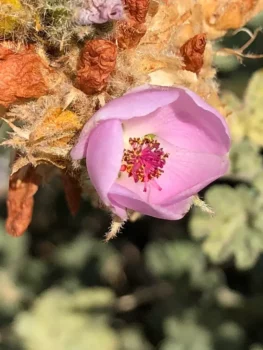
Yellowstem Bushmallow: A Rare California Native Worth Growing
If you’re looking to add a touch of wild California beauty to your garden, the yellowstem bushmallow (Malacothamnus densiflorus) might be just the ticket. This charming native shrub brings delicate pink blooms and drought-tolerant resilience to landscapes throughout its home state. But before you rush to plant one, there’s something important you should know about this special plant.
A Rare Beauty Worth Protecting
The yellowstem bushmallow has a conservation status of S3?, which means its rarity level is somewhat undefined but potentially of concern. If you’re interested in growing this lovely native, please make sure to source your plants responsibly from reputable native plant nurseries that propagate their own stock rather than collecting from wild populations.
Where Does Yellowstem Bushmallow Call Home?
This perennial shrub is native to California, where it naturally grows in chaparral and coastal sage scrub communities. You’ll find it thriving in the wild throughout Southern California’s Mediterranean climate zones.
- Species observed
- No observations
What Makes This Plant Special?
The yellowstem bushmallow gets its common name from its distinctive yellowish stems that provide year-round visual interest. During blooming season, typically from late spring through early fall, the plant produces clusters of soft pink to lavender flowers that look like tiny hollyhocks. The gray-green foliage creates a lovely backdrop for these delicate blooms, and the overall effect is both wild and refined.
As a shrub, this plant typically grows to about 3-6 feet tall and wide, though it can reach up to 13 feet under ideal conditions. Its multi-stemmed growth habit creates a naturally rounded form that works beautifully in landscape settings.
Perfect for Water-Wise Gardens
If you’re designing a drought-tolerant landscape or native plant garden, yellowstem bushmallow is an excellent choice. This hardy shrub thrives in:
- Xeriscape and water-wise gardens
- Native California plant gardens
- Mediterranean-style landscapes
- Hillside plantings for erosion control
- Wildlife gardens focused on native species
A Pollinator Magnet
One of the best reasons to grow yellowstem bushmallow is its appeal to pollinators. The flowers attract bees, butterflies, and hummingbirds, making it a valuable addition to any wildlife-friendly garden. The extended blooming period provides a reliable nectar source throughout much of the growing season.
Growing Conditions and Care
Yellowstem bushmallow is surprisingly easy to grow once you understand its preferences:
Climate: This plant is hardy in USDA zones 9-10, making it perfect for California’s mild winter areas and similar Mediterranean climates.
Sun and Soil: Plant in full sun with well-draining soil. Like most California natives, it cannot tolerate wet feet and will quickly decline in heavy, poorly-draining soils.
Water Needs: Once established, this shrub is remarkably drought-tolerant. Water regularly the first year to help establish roots, then gradually reduce watering. Mature plants typically need little to no supplemental irrigation in most California climates.
Planting and Care Tips
For the best success with yellowstem bushmallow:
- Plant in fall when cooler temperatures and winter rains will help establishment
- Choose a location with excellent drainage – consider planting on a slope or in raised beds if your soil tends to stay moist
- Space plants 4-6 feet apart to allow for mature spread
- Mulch lightly with gravel or decomposed granite rather than organic mulch
- Prune lightly after flowering to maintain shape, but avoid heavy pruning
- Avoid fertilizers, which can promote weak, leggy growth
Is Yellowstem Bushmallow Right for Your Garden?
This native shrub is an excellent choice if you want to support local ecosystems, create a low-water landscape, or add a touch of California’s natural beauty to your garden. Its combination of attractive foliage, pretty flowers, and wildlife value make it a winner for many gardeners.
Just remember to source your plants responsibly and consider this special native as a long-term investment in both your landscape and California’s natural heritage.