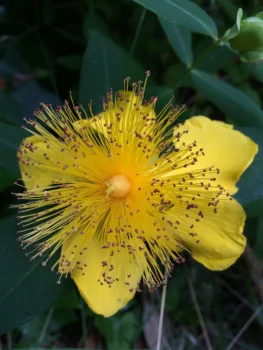
Aaron’s Beard: A Cheerful Ground Cover with Bright Yellow Blooms
Looking for a low-maintenance ground cover that brings sunshine to your garden? Meet Aaron’s beard (Hypericum calycinum), a resilient perennial shrub that carpets the ground with glossy green foliage and bursts into brilliant yellow blooms each summer. While this plant isn’t native to North America, it has found a home in gardens across several states, offering both benefits and considerations for today’s gardeners.
What is Aaron’s Beard?
Aaron’s beard is a low-growing perennial shrub that typically reaches about 0.8 feet in height. Don’t let its modest stature fool you – this plant spreads enthusiastically through underground rhizomes, creating dense mats of evergreen foliage. During its active growing period in spring and summer, it produces conspicuous yellow flowers that add a bright pop of color to any landscape.
As a rhizomatous grower with a rapid growth rate, Aaron’s beard can quickly establish itself and fill in bare spots. The plant maintains its green foliage year-round, though it becomes more porous in winter.
Native Status and Where It Grows
Aaron’s beard is not native to North America – it’s actually an introduced species that has naturalized and now reproduces spontaneously in the wild. Originally from southeastern Europe and southwestern Asia, this adaptable plant has established populations in California, Oregon, Tennessee, and Washington.
- Species observed
- No observations
While it’s not currently listed as invasive or noxious, gardeners should be aware of its non-native status and vigorous spreading habit when making planting decisions.
Garden Role and Landscape Uses
Aaron’s beard shines as a ground cover, particularly in challenging spots where other plants might struggle. Its rhizomatous growth form makes it excellent for:
- Erosion control on slopes and banks
- Understory planting in partially shaded areas
- Filling large areas that need low-maintenance coverage
- Rock gardens and naturalized landscapes
The plant’s erect shape and moderate texture make it a versatile choice for Mediterranean-style gardens and areas where you want consistent, year-round green coverage with seasonal yellow blooms.
Growing Conditions and Hardiness
One of Aaron’s beard’s greatest strengths is its adaptability. This tough little plant tolerates a wide range of conditions:
- Soil: Adapts to coarse, medium, and fine-textured soils with pH between 5.5-7.5
- Moisture: Medium moisture needs with medium drought tolerance once established
- Light: Shade tolerant, making it perfect for those tricky partially shaded spots
- Temperature: Hardy to -43°F, suitable for USDA zones 3-9
- Precipitation: Thrives with 30-60 inches of annual rainfall
The plant has a facultative upland wetland status, meaning it usually prefers non-wetland conditions but can tolerate some moisture.
Planting and Care Tips
Aaron’s beard is refreshingly low-maintenance once established. Here’s how to grow it successfully:
- Planting: Available in containers and can be propagated by sprigs. Plant 2,700-19,000 plants per acre depending on desired coverage speed
- Establishment: Requires at least 130 frost-free days and has slow regrowth after harvest or cutting
- Fertilization: Medium fertility requirements – not a heavy feeder
- Maintenance: Minimal care needed; moderate vegetative spread rate means it won’t overwhelm neighboring plants immediately
- Root depth: Develops roots at least 12 inches deep
Wildlife and Pollinator Benefits
During its early summer bloom period, Aaron’s beard’s bright yellow flowers provide nectar for bees and other pollinators. The dense ground cover can also offer shelter for small wildlife, though specific wildlife benefits vary by location.
Should You Plant Aaron’s Beard?
Aaron’s beard can be a practical choice for gardeners dealing with challenging sites that need reliable ground cover. Its adaptability, low maintenance requirements, and cheerful yellow blooms make it appealing for specific landscape situations.
However, since it’s not native to North America, consider exploring native ground cover alternatives first. Native plants support local ecosystems more effectively and often require less water and care once established. Some native alternatives to consider include wild ginger, creeping phlox, or regional native sedums, depending on your location and growing conditions.
If you do choose to plant Aaron’s beard, be mindful of its spreading nature and monitor its growth to ensure it doesn’t overwhelm more delicate neighboring plants. With proper placement and occasional management, it can serve as an effective, low-maintenance solution for challenging landscape areas.