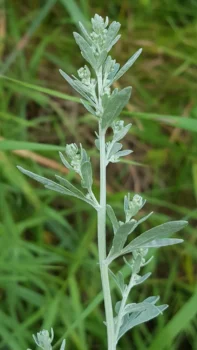
Absinthium (Artemisia absinthium): A Beautiful but Problematic Garden Guest
If you’ve ever wandered through an herb garden and caught a whiff of something intensely aromatic and slightly bitter, you might have encountered absinthium, also known as wormwood. This silvery-leafed perennial has a fascinating history and undeniable beauty, but before you rush to add it to your garden, there are some important things every gardener should know.
What Is Absinthium?
Artemisia absinthium is a perennial herb that belongs to the sunflower family. Despite its delicate appearance, this plant is tough as nails and known for its distinctive silvery-gray foliage and intensely aromatic leaves. The plant produces small, yellow flowers in late summer that cluster together in drooping panicles, creating an almost ethereal appearance in the garden.
As a forb herb, absinthium lacks significant woody tissue and maintains its perennial nature through buds located at or below ground level. This growing strategy helps it survive harsh winters and bounce back year after year.
Native Status and Distribution
Here’s where things get a bit complicated. Absinthium isn’t native to North America – it originally hails from Europe, Asia, and North Africa. However, this adaptable plant has made itself quite at home across much of the continent, establishing populations that reproduce and persist without human help.
You can find absinthium growing wild across an impressive range of locations, from Canadian provinces like Alberta, British Columbia, and Ontario, all the way down through most U.S. states including Colorado, Maine, Michigan, Montana, Oregon, and Wyoming, among many others.
- Species observed
- No observations
The Invasive Reality
Important Alert: Before considering absinthium for your garden, you need to know that this plant has invasive tendencies. In Wisconsin, it’s classified as Restricted, meaning its spread is considered problematic for local ecosystems. This beautiful herb can quickly dominate areas, crowding out native plants that local wildlife depends on.
Because of its invasive potential, we strongly recommend against planting absinthium in your garden, no matter how attractive it might seem.
Garden Characteristics and Growing Conditions
If absinthium weren’t invasive, it would actually be a gardener’s dream in many ways. This hardy perennial thrives in USDA zones 4-8 and tolerates poor soils, drought, and neglect better than most plants. It prefers:
- Full sun exposure
- Well-drained soil (even poor, rocky soil)
- Minimal water once established
- Very little maintenance
The plant typically grows 2-4 feet tall and can spread just as wide, creating dense patches over time. Its aggressive spreading habit is precisely what makes it problematic in natural settings.
Better Native Alternatives
Instead of planting invasive absinthium, consider these native alternatives that offer similar benefits without the ecological concerns:
- Prairie Sage (Artemisia ludoviciana): A native relative with similar silvery foliage and aromatic qualities
- White Sage (Artemisia tridentata): Another native artemisia with drought tolerance and wildlife benefits
- Yarrow (Achillea millefolium): Native variety offers feathery foliage and excellent pollinator support
- Wild Bergamot (Monarda fistulosa): Aromatic native herb that attracts beneficial insects
Wildlife and Pollinator Considerations
While absinthium does attract some beneficial insects, it doesn’t provide the specialized relationships that native plants offer to local wildlife. Native alternatives will always provide better support for butterflies, bees, and other creatures that have evolved alongside them for thousands of years.
The Bottom Line
Absinthium might catch your eye with its silvery beauty and easy-care nature, but its invasive tendencies make it a poor choice for responsible gardeners. Instead, explore the wonderful world of native alternatives that can provide similar aesthetic appeal while supporting your local ecosystem.
Remember, every plant choice we make in our gardens has the potential to impact the broader environment. By choosing native plants over invasive species like absinthium, you’re helping preserve biodiversity and creating habitat for the wildlife that makes our gardens truly come alive.