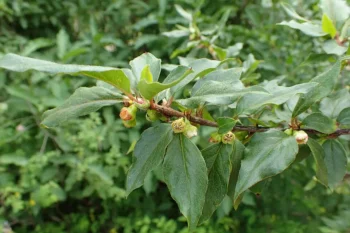
Acuminate Cotoneaster: A Rare and Little-Known Garden Shrub
If you’ve stumbled across the name acuminate cotoneaster (Cotoneaster acuminatus) in your gardening research, you’re looking at one of the more obscure members of the cotoneaster family. This perennial shrub is so uncommon in American gardens that even seasoned gardeners might scratch their heads when they hear about it.
What is Acuminate Cotoneaster?
Acuminate cotoneaster is a non-native shrub that has found its way into the Pacific Northwest, specifically Oregon. As its name suggests, this plant belongs to the extensive cotoneaster family, though it’s far less familiar than its cousins like rock cotoneaster or cranberry cotoneaster that you might see in garden centers.
This multi-stemmed woody plant typically stays under 13-16 feet tall, making it a manageable size for most landscapes. Like other cotoneasters, it’s a perennial that will stick around year after year once established.
Where Does It Come From and Where Does It Grow?
Originally from the Himalayan regions, acuminate cotoneaster has established itself as a naturalized plant in Oregon, where it reproduces on its own without human intervention. Its geographic distribution in the United States appears quite limited compared to other cotoneaster species.
- Species observed
- No observations
What Does It Look Like?
Here’s where things get a bit tricky – there’s limited information available about the specific appearance and characteristics of Cotoneaster acuminatus. Like other cotoneasters, it likely produces small white or pinkish flowers in spring, followed by colorful berries that persist into fall and winter.
Should You Plant Acuminate Cotoneaster?
While this plant isn’t considered invasive or problematic, there are several reasons why you might want to think twice before adding it to your garden:
- Very limited availability – you’ll likely have a hard time finding it at nurseries
- Sparse growing information makes successful cultivation uncertain
- Unknown wildlife and pollinator benefits
- Unclear hardiness zones and specific care requirements
Better Alternatives for Your Garden
If you’re drawn to the idea of a cotoneaster-like shrub, consider these well-documented native alternatives that will better support local ecosystems:
- Serviceberry (Amelanchier species) – gorgeous spring flowers and fall color
- Ninebark (Physocarpus opulifolius) – easy-care native with interesting bark texture
- Spicebush (Lindera benzoin) – excellent for wildlife and shade tolerance
- Native viburnums – fantastic for birds and pollinators
If You’re Determined to Try It
Should you somehow locate acuminate cotoneaster and decide to give it a go, here’s what little guidance is available:
- Plant in well-draining soil
- Provide full sun to partial shade
- Water regularly during establishment
- Prune after flowering if needed
Keep in mind that without clear hardiness zone information or specific care requirements, you’ll be gardening by trial and error.
The Bottom Line
Acuminate cotoneaster falls into that peculiar category of plants that exist in the gardening world but aren’t particularly well-suited for home landscapes. With so many well-documented, readily available native plants that provide clear benefits to wildlife and pollinators, it’s hard to make a strong case for tracking down this elusive shrub.
Your garden (and local ecosystem) will likely be much happier with native alternatives that have proven track records and clear growing requirements. Sometimes the most interesting plant isn’t necessarily the best plant for your space!