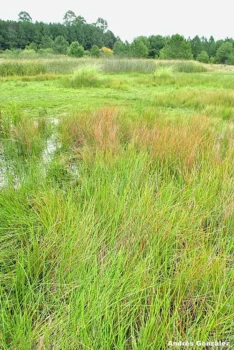
Acute Spikerush: A Water-Loving Sedge for Your Garden
If you’re looking to add some grassy texture to your water garden or boggy area, you might come across acute spikerush (Eleocharis acutangula). This perennial sedge brings a subtle, naturalized look to wet spaces, though there are some important things to consider before adding it to your landscape.
What is Acute Spikerush?
Acute spikerush is a grass-like perennial that belongs to the sedge family (Cyperaceae). Don’t let the name fool you – despite being called a rush, it’s actually a sedge! You might also see it listed under its scientific synonyms Eleocharis fistulosa or Scirpus fistulosus in older gardening references.
This slender plant produces thin, green stems topped with small, inconspicuous brown flower spikes. It’s the kind of plant that provides texture and structure rather than showy blooms – think of it as the supporting actor in your garden’s cast.
Where Does It Grow?
Here’s where things get interesting: acute spikerush isn’t actually native to North America. This sedge originally hails from tropical and subtropical regions of Asia, Africa, and Australia. In the United States, it has established populations in Florida and Texas, where it grows and reproduces on its own in the wild.
- Species observed
- No observations
The Native Plant Perspective
Since acute spikerush is a non-native species, you might want to consider native alternatives that provide similar benefits to local ecosystems. Native spikerush species like Eleocharis obtusa (blunt spikerush) or Eleocharis palustris (common spikerush) offer comparable aesthetic appeal while supporting local wildlife and maintaining ecological balance.
Growing Conditions and Care
If you do choose to grow acute spikerush, here’s what you need to know:
- Light: Full sun to partial shade
- Water: Loves consistently moist to wet conditions – perfect for pond edges or rain gardens
- Soil: Tolerates various soil types as long as they stay moist
- Climate: Best suited for USDA hardiness zones 8-11
According to wetland classifications, this plant has facultative status in the Atlantic and Gulf Coastal Plain, meaning it can handle both wet and somewhat drier conditions, though it clearly prefers the wet side of life.
Garden Design Ideas
Acute spikerush works well in:
- Water garden margins
- Rain gardens and bioswales
- Bog gardens
- Naturalized wet meadows
- Pond-side plantings
Its fine texture creates a nice contrast against broader-leaved water plants, and its vertical growth habit adds structure to informal, naturalistic designs.
Wildlife Considerations
While acute spikerush may provide some habitat value, native sedges and rushes are generally better choices for supporting local wildlife populations. Native plants have co-evolved with local insects, birds, and other creatures, creating important food webs that non-native species can’t replicate as effectively.
The Bottom Line
Acute spikerush can be an attractive addition to water features, especially if you’re drawn to its subtle, grass-like appearance. However, as responsible gardeners, we’d encourage you to first explore native alternatives that provide similar aesthetic benefits while supporting local ecosystems. Your local native plant society or extension office can help you identify the best native sedges and rushes for your specific region and growing conditions.
Remember, every plant choice is an opportunity to create habitat and support the incredible web of life that surrounds us – why not make it count?