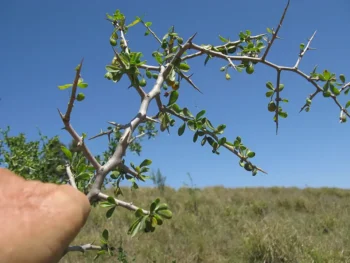
African Boxthorn: A Beautiful but Problematic Plant You Should Avoid
If you’ve ever encountered African boxthorn (Lycium ferocissimum) in the wild, you might be drawn to its colorful berries and delicate flowers. But before you consider adding this South African native to your garden, there are some important things you need to know about this thorny character.
What is African Boxthorn?
African boxthorn is a perennial shrub that typically grows 13-16 feet tall with multiple stems arising from the ground. Originally from South Africa, this hardy plant has made itself quite at home in California, where it now grows wild. The plant produces small white to pale purple flowers followed by bright red to orange berries that might catch your eye.
You might also see this plant listed under its scientific synonym, Lycium ferrocissimum, but don’t let the different spelling fool you – it’s the same species with the same problematic behavior.
Why You Should Think Twice
Here’s the thing about African boxthorn: it’s classified as a noxious weed in the United States. This means it’s not just an innocent garden escapee – it’s a plant that can cause real ecological and economic harm. Once established, African boxthorn reproduces on its own in the wild and tends to stick around, often crowding out native plants that local wildlife depends on.
Currently, African boxthorn is found growing wild in California, where it has established itself as a persistent presence in the landscape.
- Species observed
- No observations
The Tempting Qualities (And Why They’re Problematic)
It’s easy to see why someone might be attracted to African boxthorn:
- Extremely drought tolerant once established
- Thrives in full sun and poor soils
- Salt tolerant, making it suitable for coastal areas
- Hardy in USDA zones 9-11
- Produces flowers that attract bees and pollinators
- Can serve as an effective thorny barrier
But these very qualities that make it easy to grow are exactly what make it problematic – it’s too good at surviving and spreading!
Better Native Alternatives
Instead of planting African boxthorn, consider these native alternatives that can give you similar benefits without the ecological headaches:
- Coyote brush (Baccharis pilularis) – Great for coastal areas and drought tolerance
- Toyon (Heteromeles arbutifolia) – Beautiful berries and excellent wildlife value
- Ceanothus species – Gorgeous flowers and fantastic for pollinators
- Manzanita (Arctostaphylos species) – Stunning bark and flowers, extremely drought tolerant
If You Already Have It
If African boxthorn has already established itself on your property, removal is your best bet. Be prepared for a challenge – this plant doesn’t give up easily. Wear heavy gloves and long sleeves when dealing with those thorns, and be persistent with removal efforts as it can resprout from root fragments.
The Bottom Line
While African boxthorn might seem like an attractive, low-maintenance option for tough growing conditions, its status as a noxious weed makes it a poor choice for responsible gardeners. By choosing native alternatives instead, you’ll get similar benefits while supporting local ecosystems and avoiding potential legal issues. Your local wildlife – and your neighbors – will thank you for making the more thoughtful choice!