African Cornflag: A Winter-Blooming Wonder for Mild Climates
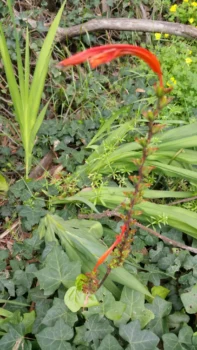
When most gardens are taking their winter nap, African cornflag (Chasmanthe floribunda) puts on quite the show. This South African native brings a burst of fiery orange-red blooms to California gardens just when you need color most – during the cooler months when many other plants have called it quits for the season.
What Exactly Is African Cornflag?
African cornflag is a perennial bulb plant (technically growing from structures called corms) that belongs to the iris family. Don’t let the cornflag name confuse you – it has nothing to do with corn! The name likely comes from its sword-shaped leaves that resemble flags fluttering in the breeze. You might also see it listed under its synonym Chasmanthe aethiopica in some older gardening references.
This herbaceous perennial produces dramatic spikes of tubular flowers in shades of bright orange to orange-red, typically blooming from late winter through spring. The flowers sit atop sturdy stems that can reach 3-4 feet tall, making them excellent cut flowers and garden focal points.
Where Does It Grow?
Originally from the Western and Eastern Cape provinces of South Africa, African cornflag has found a comfortable home in California, where it has naturalized and reproduces on its own in the wild. It thrives in the state’s Mediterranean climate, which closely mimics its native South African conditions.
- Species observed
- No observations
The Good, The Bad, and The Beautiful
Why gardeners love it:
- Provides stunning winter and early spring color when most gardens look drab
- Attracts hummingbirds with its bright tubular flowers
- Extremely drought tolerant once established
- Makes excellent cut flowers
- Low maintenance – practically grows itself
- Thrives in Mediterranean climates
Things to consider:
- Can spread aggressively via underground corms in ideal conditions
- Goes completely dormant in summer, leaving bare spots
- Limited to mild winter areas (USDA zones 9-11)
- As a non-native species, it doesn’t support local ecosystems as well as native plants
Growing African Cornflag Successfully
If you decide to grow African cornflag, here’s how to keep it happy:
Location and Soil: Choose a spot with full sun to partial shade and well-draining soil. This plant absolutely despises soggy conditions, especially during its summer dormancy period. Sandy or loamy soils work best.
Planting: Plant corms in fall, about 3-4 inches deep and 6 inches apart. Fall planting allows the roots to establish during the cool, wet season.
Watering: Water regularly during the growing season (fall through spring), but cut back dramatically once the foliage starts dying back in late spring. Think Mediterranean – wet winters, dry summers.
Maintenance: Remove spent flower stems to prevent excessive self-seeding if you’re concerned about spread. Allow the foliage to die back naturally to feed the corms for next year’s show.
Consider Native Alternatives
While African cornflag isn’t considered invasive, choosing native plants that provide similar benefits can better support local wildlife and ecosystems. Consider these California natives for winter color:
- Red-flowering currant (Ribes sanguineum): Provides early spring red flowers beloved by hummingbirds
- Chuparosa (Justicia californica): Offers orange-red tubular flowers that hummingbirds adore
- California fuchsia (Epilobium canum): Features bright red-orange flowers that bloom into fall
The Bottom Line
African cornflag can be a stunning addition to Mediterranean-style gardens in mild climates, especially if you’re looking for reliable winter color and hummingbird appeal. Just be mindful of its spreading nature and consider incorporating native alternatives alongside it to create a garden that’s both beautiful and ecologically beneficial.
Whether you choose to grow this South African beauty or opt for native alternatives, the key is creating a garden that brings you joy while supporting the local environment. After all, the best garden is one that makes both you and your local wildlife happy!