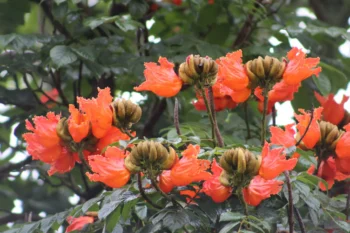
African Tuliptree: A Spectacular Flowering Giant for Warm Climate Gardens
If you’ve ever dreamed of having a tree that looks like it’s perpetually celebrating with brilliant orange-red fireworks, meet the African tuliptree (Spathodea campanulata). This stunning perennial tree is like nature’s own party planner, producing show-stopping blooms that’ll have your neighbors doing double-takes and hummingbirds throwing impromptu dance parties in your yard.
What Makes the African Tuliptree Special?
The African tuliptree is a true showstopper that typically grows as a single-trunked tree reaching heights of 13-16 feet or more under the right conditions. What really sets this beauty apart are its incredible tulip-shaped flowers in vibrant shades of orange and red, paired with large, glossy compound leaves that create a lush, tropical canopy.
Originally hailing from tropical Africa, this tree has found its way into warm climate gardens across the globe, bringing a taste of exotic beauty to landscapes that can support its heat-loving nature.
Where You’ll Find African Tuliptrees Growing
In the United States, you’ll spot African tuliptrees thriving in Florida, Hawaii, and U.S. territories including Guam, Palau, Puerto Rico, and the Virgin Islands. These locations share the warm, frost-free conditions this tree absolutely craves.
- Species observed
- No observations
Is This Tree Right for Your Garden?
Here’s the scoop: the African tuliptree is a non-native species that has established itself in various warm regions. While it’s not currently listed as invasive in our available data, it’s always worth checking with your local extension office about any regional concerns.
You might love this tree if you:
- Live in USDA hardiness zones 10-12
- Want a fast-growing specimen tree with incredible flowers
- Have space for a large tree (they can get quite substantial!)
- Love attracting hummingbirds and other pollinators
- Enjoy tropical or subtropical garden styles
Consider native alternatives if:
- You prefer supporting local ecosystems with indigenous plants
- You live in an area where non-native trees are discouraged
- You want a tree that’s perfectly adapted to your specific regional conditions
Growing Your African Tuliptree Successfully
Good news for busy gardeners: African tuliptrees are relatively easy-going once you understand their basic needs!
Ideal Growing Conditions:
- Full sun to partial shade (they love their sunshine!)
- Well-draining soil that doesn’t stay soggy
- Regular watering, especially when the tree is young and establishing
- Protection from frost and freezing temperatures
- Space to spread out – these trees like room to grow
Planting and Care Tips
When planting your African tuliptree, choose a location where it won’t outgrow its space. These fast growers can surprise you with their enthusiasm! Dig a hole twice as wide as the root ball but no deeper, and water regularly during the first growing season to help establish strong roots.
Regular pruning can help maintain shape and size, plus it’s a great opportunity to remove any dead or crossing branches. Just remember to prune after flowering to avoid cutting off next year’s blooms.
The Pollinator Party
One of the most delightful aspects of growing an African tuliptree is watching it become a hub of activity. The nectar-rich flowers are magnets for hummingbirds, and you’ll likely see bees and other pollinators joining the feast. It’s like having a wildlife viewing station right in your backyard!
A Note About Water Preferences
Interestingly, African tuliptrees are classified as Facultative Upland plants in their growing regions, meaning they usually prefer well-draining, non-wetland conditions but can tolerate occasional wet periods. This makes them fairly adaptable to different soil moisture levels, though they definitely don’t want to sit in constantly soggy soil.
The Bottom Line
The African tuliptree is undeniably gorgeous and can be a spectacular addition to the right garden in the right climate. If you’re in zones 10-12 and have space for a large, fast-growing tree that puts on a year-round flower show, this could be your new garden superstar. Just remember to consider native alternatives that might provide similar beauty while supporting local ecosystems – your local native plant society can point you toward some amazing options that are perfectly suited to your specific area.
Whether you choose the African tuliptree or decide to explore native alternatives, the goal is creating a garden space that brings you joy while being mindful of the broader environmental picture. Happy gardening!