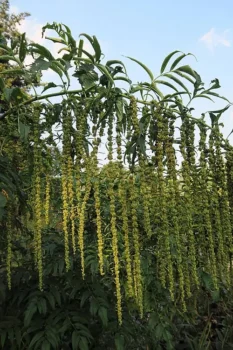
Akalbir: A Towering Garden Curiosity Worth Considering
Ever stumbled across a plant that makes you do a double-take? Meet akalbir (Datisca cannabina), a fascinating perennial that’s sure to spark conversations in your garden. With its distinctive cannabis-like leaves and impressive stature, this unusual plant brings a touch of the exotic to temperate landscapes.
What Makes Akalbir Special?
Don’t let the name fool you – akalbir has no relation to its more famous look-alike. This tall herbaceous perennial belongs to the small Datiscaceae family and hails from the mountainous regions of the Himalayas, Central Asia, Turkey, and the Caucasus. It’s a true conversation starter with compound leaves that create an almost tropical feel in cooler climates.
Garden Appeal and Landscape Role
Akalbir isn’t your typical border plant. This statuesque beauty can reach heights of 6 to 10 feet, making it perfect for:
- Back-of-border plantings where height is needed
- Specimen placement in collectors’ gardens
- Naturalistic plantings that embrace unusual textures
- Areas where you want to create a bold, architectural statement
The plant produces small, greenish flowers in clusters during summer, though they’re more subtle than showy. The real star is the foliage – those deeply divided leaves create an almost fern-like texture that contrasts beautifully with broader-leaved companions.
Growing Conditions and Care
Akalbir appreciates conditions similar to its mountainous homeland. Here’s what it needs to thrive:
- Soil: Moist, well-draining soil that doesn’t dry out completely
- Light: Partial shade to full sun, though some afternoon shade is appreciated in hot climates
- Hardiness: USDA zones 6-8 work best
- Water: Consistent moisture is key – this isn’t a drought-tolerant plant
Planting and Care Tips
Getting akalbir established requires a bit of attention to detail:
- Plant in spring after the last frost threat has passed
- Provide support or staking, as the tall stems can topple in wind
- Mulch around the base to help retain soil moisture
- Cut back to ground level after the first hard frost
- Be patient – it may take a season or two to reach full impressive height
Wildlife and Pollinator Value
While akalbir won’t have bees lining up at your garden gate, it does offer some wildlife value. As a wind-pollinated plant, it doesn’t provide significant nectar resources, but the tall structure can offer shelter for beneficial insects and birds.
Should You Grow Akalbir?
This plant isn’t for everyone, and that’s perfectly fine. Consider akalbir if you:
- Love unique, conversation-starting plants
- Have space for tall perennials
- Can provide consistent moisture
- Appreciate subtle beauty over flashy flowers
However, since akalbir isn’t native to North America, you might also consider native alternatives that provide similar height and texture, such as wild senna (Senna hebecarpa) or cup plant (Silphium perfoliatum), which offer the bonus of supporting local wildlife.
The Bottom Line
Akalbir is definitely a niche plant – not invasive, not particularly showy, but undeniably interesting. If you’re drawn to unusual plants and have the right growing conditions, it could be a delightful addition to your garden. Just remember that with great height comes great responsibility – be prepared to provide support and consistent care for this towering curiosity.