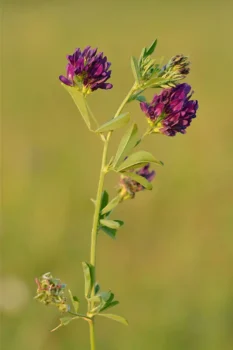
Alfalfa (Medicago): The Humble Forage Plant in Your Garden
You’ve probably heard of alfalfa in the context of farming or maybe even sprouting seeds for salads, but have you ever considered this humble plant for your garden? Medicago, commonly known as alfalfa, is a surprisingly widespread genus that has made itself at home across North America, though it didn’t start out here.
What Exactly Is Alfalfa?
Alfalfa belongs to the Medicago genus, a group of plants that are technically forbs – think of them as non-woody plants that pop up from the ground each growing season. These can be either annual or perennial, depending on the specific species, and they’re part of the legume family, which means they have a pretty neat trick up their sleeves: they can actually improve soil by fixing nitrogen.
Where You’ll Find Alfalfa Growing
Here’s where things get interesting – alfalfa has become a true cosmopolitan plant. Originally from the Mediterranean region and parts of Asia, various Medicago species have established themselves throughout North America. You can find them growing everywhere from Alaska to Alabama, from British Columbia to the Virgin Islands. They’ve essentially made themselves at home in every U.S. state, Canadian province, and territory.
- Species observed
- No observations
The Garden Reality Check
Let’s be honest – alfalfa probably won’t win any beauty contests in your garden. While the small flowers can attract pollinators like bees, the overall aesthetic appeal is pretty modest. These plants are more about function than form, which explains why they’re primarily known as agricultural crops rather than ornamental garden stars.
Wildlife Benefits: A Mixed Bag
If you’re hoping to create a wildlife haven, alfalfa offers some benefits, but they’re fairly limited:
- Large animals like deer use it for only 2-5% of their diet and rarely for cover
- Small mammals get about 5-10% of their diet from alfalfa but don’t often use it for shelter
- Birds similarly use it for 5-10% of their diet, with infrequent cover benefits
Growing Conditions and Care
One thing alfalfa has going for it is adaptability. These plants are generally low-maintenance and can tolerate a range of growing conditions once established. They tend to be drought-tolerant and can self-seed readily – perhaps a little too readily in some cases.
Should You Plant Alfalfa in Your Garden?
Here’s where we need to have a thoughtful conversation. While alfalfa isn’t typically considered invasive or problematic, it is non-native to North America. If your goal is to support local ecosystems and native wildlife, you might want to consider native alternatives that will provide greater benefits.
Better Native Alternatives
Instead of alfalfa, consider these native legumes that offer similar soil-improving benefits while supporting local wildlife:
- Wild lupine (Lupinus species) – stunning flower spikes and crucial for some butterflies
- Partridge pea (Chamaecrista fasciculata) – bright yellow flowers and important for native bees
- Wild senna (Senna hebecarpa) – attractive foliage and flowers, supports specialized butterflies
- American groundnut (Apios americana) – climbing vine with fragrant flowers
The Bottom Line
Alfalfa is an interesting plant with a fascinating ability to spread and adapt, but it’s not necessarily the best choice for a native garden focused on supporting local wildlife. While it won’t cause major problems in most situations, native alternatives will give you more bang for your buck when it comes to supporting pollinators, birds, and other wildlife. Plus, many native legumes are simply more beautiful and interesting than their humble agricultural cousin.
If you do encounter alfalfa growing wild in your area, you can appreciate it for what it is – a testament to plant adaptability and a reminder of how interconnected our agricultural and natural systems have become.