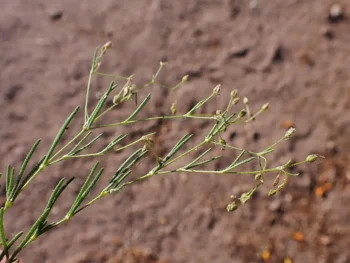
Alkali Sandspurry: A Hardy Annual for Challenging Garden Spots
If you’ve ever struggled with salty, alkaline soil that seems to reject every plant you try, meet your potential new garden ally: alkali sandspurry (Spergularia diandra). This unassuming little annual might not win any beauty contests, but it’s got some serious staying power in conditions that would make other plants throw in the trowel.
What Is Alkali Sandspurry?
Alkali sandspurry is a small, mat-forming annual forb that belongs to the pink family. Don’t let the delicate name fool you – this little survivor is tougher than it sounds. As its common name suggests, it has a particular fondness for alkaline, salty soils that would send most garden plants packing.
You might also encounter this plant listed under its botanical synonym, Spergularia salsuginea, in older gardening references or seed catalogs.
Native Status and Distribution
Here’s where things get interesting from a native gardening perspective: alkali sandspurry isn’t actually native to North America. This hardy little plant originally hails from Eurasia but has established itself across parts of Canada and the United States. You’ll find it growing wild in Alberta, Saskatchewan, Idaho, Massachusetts, Oregon, Washington, and Wyoming.
- Species observed
- No observations
While it’s considered non-native, alkali sandspurry has naturalized in these regions without currently being classified as invasive or noxious. However, as a native gardening enthusiast, you might want to consider native alternatives that can provide similar benefits to your local ecosystem.
What Does It Look Like?
Alkali sandspurry won’t win any showiest flower awards, but it has its own understated charm. This low-growing annual forms small mats or cushions, typically staying under 6 inches tall but spreading outward. The tiny flowers are delicate pink or white, appearing in small clusters from spring through fall. The narrow, succulent-like leaves help it conserve moisture in harsh conditions.
Growing Conditions and Care
This is where alkali sandspurry really shines – or rather, where it thrives in conditions that make other plants wither:
- Soil: Loves alkaline, saline soils that most plants can’t tolerate
- Sun exposure: Full sun preferred
- Water: Drought tolerant once established; actually prefers drier conditions
- USDA Hardiness Zones: Generally hardy in zones 3-9
- Wetland preference: Facultative wetland plant, meaning it’s comfortable in both wet and dry conditions
Where to Use Alkali Sandspurry in Your Garden
Think of alkali sandspurry as your go-to plant for problem spots:
- Coastal gardens where salt spray is an issue
- Areas with naturally alkaline or saline soil
- Disturbed soil areas that need stabilization
- Rock gardens with challenging growing conditions
- Xeriscaping projects in harsh climates
Planting and Maintenance
The good news? Alkali sandspurry is refreshingly low-maintenance. As an annual, it completes its life cycle in one growing season, but it readily self-seeds for next year’s display. You can direct sow seeds in early spring or fall. Once established, it requires minimal care – in fact, too much attention (like regular watering or fertilizing) might actually harm this tough little survivor.
Wildlife and Pollinator Benefits
While alkali sandspurry’s small flowers aren’t major pollinator magnets, they do attract small insects like flies and tiny native bees. The seeds may provide food for small birds, though it’s not considered a primary wildlife food source.
Should You Plant Alkali Sandspurry?
The answer depends on your specific situation and gardening philosophy. If you’re dealing with particularly challenging saline or alkaline soil conditions and need something that will actually grow and provide ground cover, alkali sandspurry could be a practical choice. It’s especially useful for erosion control on disturbed soils.
However, as native gardening advocates, we’d encourage you to first explore native alternatives that might work in your specific conditions. Consider researching native plants in your region that tolerate alkaline soils – your local native plant society or extension office can be invaluable resources for finding region-specific alternatives that will provide greater benefits to local wildlife and ecosystems.
The Bottom Line
Alkali sandspurry is like that reliable friend who shows up when everyone else bails – it might not be the flashiest option, but it gets the job done when conditions get tough. While it’s not native to North America, it’s also not currently considered invasive, making it a neutral choice for gardeners facing particularly challenging growing conditions.
Just remember: whenever possible, native plants are the gold standard for supporting local ecosystems. But sometimes, in the most challenging spots, a naturalized plant like alkali sandspurry might be the bridge that helps you create the foundation for a more diverse, thriving garden down the road.