Alligatorweed: Why This Invasive Plant Should Stay Out of Your Garden
If you’ve heard of alligatorweed (Alternanthera philoxeroides), it’s probably not for good reasons. This South American native has earned a notorious reputation across the southeastern United States as one of our most problematic aquatic weeds. While some gardeners might be tempted by its ability to form dense green mats, alligatorweed is definitely not a plant you want anywhere near your garden or local waterways.
What Is Alligatorweed?
Alligatorweed is a perennial forb that’s basically the aquatic equivalent of that overly enthusiastic party guest who won’t leave. This non-native plant reproduces without any human help and has made itself quite at home across 16 states, from California to Virginia, plus Puerto Rico. It’s classified as an obligate wetland plant, meaning it almost always occurs in wetlands, shallow water, and consistently moist areas.
The plant gets its quirky name from its distinctive growth pattern and habitat preferences, though it has nothing to do with actual alligators. It’s also known by the botanical name Alternanthera philoxeroides, with the synonym Achyranthes philoxeroides.
Geographic Distribution and Invasive Status
Alligatorweed has established populations across much of the southern United States, including Alabama, Arkansas, California, Florida, Georgia, Illinois, Kentucky, Louisiana, Mississippi, North Carolina, Oklahoma, South Carolina, Tennessee, Texas, Virginia, and Puerto Rico.
- Species observed
- No observations
Important Alert: This plant carries serious legal and environmental concerns. In Alabama, it’s classified as a Category 1 invasive species and a Class C noxious weed. North Carolina lists it as invasive. These classifications exist for good reason – alligatorweed poses significant threats to native ecosystems and water management.
Why You Should Avoid Alligatorweed
Here’s why alligatorweed should be on your absolutely not list:
- Aggressive spreader: With a rapid growth rate and rapid vegetative spread, it quickly forms dense mats that crowd out native plants
- Water system disruptor: It clogs waterways, impedes boat traffic, and disrupts natural water flow
- Ecosystem threat: Dense growth blocks sunlight from reaching underwater plants and reduces oxygen levels
- Difficult to control: Once established, it’s extremely challenging and expensive to remove
- Legal issues: Planting or transporting it may be illegal in your area
Plant Characteristics
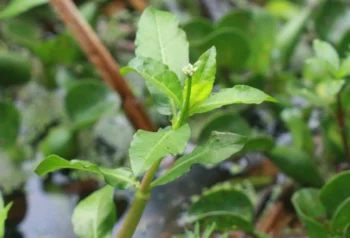
If you encounter alligatorweed, here’s how to identify it:
- Height: Stays relatively short at about 0.2 feet tall
- Growth habit: Prostrate and stoloniferous (spreading by runners)
- Leaves: Medium-textured green foliage that’s porous in both summer and winter
- Flowers: Small, inconspicuous white flowers that bloom in early spring
- Growth pattern: Forms dense mats through rapid vegetative spread
Growing Conditions (For Identification Only)
Understanding where alligatorweed thrives can help you identify problem areas:
- Hardiness: Thrives in warm climates with minimum temperatures around -3°F
- Soil: Adapts to coarse, medium, and fine-textured soils
- pH tolerance: Grows in pH ranges from 4.8 to 8.8
- Water needs: High moisture requirements with high tolerance for waterlogged conditions
- Sun exposure: Tolerates intermediate shade levels
Better Native Alternatives
Instead of risking the environmental damage that comes with alligatorweed, consider these native wetland plants that provide similar coverage without the ecological havoc:
- Native sedges (Carex species) – Excellent for erosion control and wildlife habitat
- Lizard’s tail (Saururus cernuus) – Beautiful white flower spikes and great for wet areas
- Blue flag iris (Iris versicolor) – Stunning blue flowers and natural water filtration
- Native arrowheads (Sagittaria species) – Attractive foliage and white flowers
What to Do If You Find Alligatorweed
If you discover alligatorweed on your property or in your community:
- Contact your local extension office or natural resources department immediately
- Don’t attempt removal yourself – fragments can spread the infestation
- Never transport plant material, even for disposal
- Report locations to your state’s invasive species program
The Bottom Line
While alligatorweed might seem like a hardy solution for wet, difficult-to-plant areas, it’s actually an ecological disaster waiting to happen. Its invasive nature, legal restrictions, and environmental damage far outweigh any perceived benefits. Stick with native alternatives that will give you the coverage you want while supporting local ecosystems and keeping you on the right side of the law.
Remember: the best garden choices are plants that enhance rather than harm our natural landscapes. When it comes to alligatorweed, the kindest thing you can do for your local environment is to keep it far away from your garden.