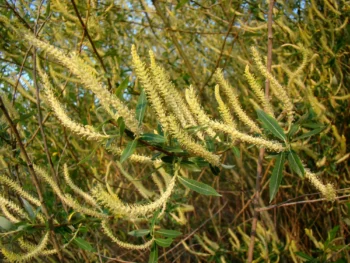
Almond Willow: A Hardy Wetland Shrub for Challenging Spots
If you’re dealing with a soggy corner of your yard that seems impossible to plant, meet the almond willow (Salix triandra). This adaptable shrub might just be the solution you’ve been looking for. Also known as almond-leaf willow or French willow, this perennial woody plant has made itself quite at home in wet areas across Ontario and beyond.
What Is Almond Willow?
Almond willow is a multi-stemmed shrub that typically grows 13-16 feet tall, though it can occasionally stretch taller or develop a more tree-like form depending on growing conditions. True to its name, the leaves are narrow and lance-shaped, resembling almond leaves, with a glossy green top and pale underside that creates a lovely shimmer in the breeze.
One important thing to know upfront: almond willow isn’t a North American native. It originally hails from Europe and western Asia but has naturalized in parts of Canada, particularly Ontario. While it reproduces on its own in the wild, it’s not currently listed as invasive.
Where Does It Grow?
In North America, you’ll find established populations primarily in Ontario, where it has adapted well to local conditions. The plant thrives in USDA hardiness zones 4-8, making it quite cold-hardy.
- Species observed
- No observations
The Wet Feet Wonder
Here’s where almond willow really shines – it absolutely loves wet conditions. In fact, its wetland status varies by region:
- Atlantic and Gulf Coastal Plain: Obligate wetland (almost always in wet areas)
- Eastern Mountains, Midwest, and Northeast regions: Facultative wetland (usually wet but can handle drier spots)
This makes it perfect for those challenging wet spots where other plants might sulk or simply give up the ghost.
Garden Appeal and Landscape Use
Almond willow brings several attractive features to the landscape. In early spring, before the leaves emerge, it produces small catkins that add subtle interest and provide much-needed pollen for early-season pollinators like bees. The reddish-brown to yellow-brown bark on young stems adds winter interest, and the narrow leaves create a fine-textured appearance that works well as a backdrop for showier plants.
This shrub works best in:
- Rain gardens and bioswales
- Erosion control on slopes near water
- Informal screens and naturalized areas
- Wetland restoration projects
- Any spot that stays consistently moist
Growing Almond Willow Successfully
The good news? Almond willow is refreshingly easy to grow. It prefers full sun to partial shade and thrives in moist to wet soils. While it’s happiest with its feet constantly damp, it can tolerate brief dry spells once established.
Here are the key growing tips:
- Soil: Adaptable to various soil types, but consistently moist conditions are ideal
- Water: Loves wet feet – perfect for areas with poor drainage
- Maintenance: Fast-growing and low-maintenance once established
- Pruning: Benefits from occasional pruning to maintain shape and size
- Propagation: Grows easily from cuttings if you want more plants
Should You Plant It?
Almond willow can be useful for specific challenging situations, particularly wet areas where native options might be limited. However, since it’s not native to North America, consider exploring native willow alternatives first. Native species like pussy willow (Salix discolor) or black willow (Salix nigra) might offer similar benefits while supporting local ecosystems more effectively.
If you do choose almond willow, it’s best suited for informal, naturalized settings rather than formal garden beds. Think of it as a problem-solver for those tricky wet spots rather than a star performer for your main landscape.
The Bottom Line
Almond willow is a reliable, hardy shrub that excels in wet conditions where many other plants struggle. While it’s not native, it’s also not causing major ecological problems. If you have a persistently wet area that needs coverage and erosion control, and native options aren’t readily available or suitable, almond willow can be a practical choice. Just remember to check with your local native plant society about indigenous alternatives that might work even better for your specific location and local wildlife.