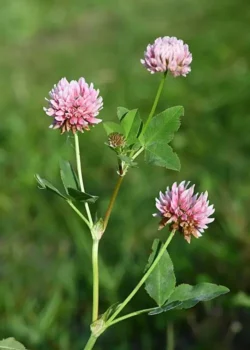
Alsike Clover: A Hardy Ground Cover with Mixed Garden Potential
If you’re looking for a tough, fast-growing ground cover that can handle challenging conditions, alsike clover (Trifolium hybridum) might catch your eye. This resilient member of the pea family has been making itself at home across North America for generations, though it’s not originally from these parts. Let’s dig into whether this adaptable plant deserves a spot in your garden.
What Exactly is Alsike Clover?
Alsike clover is a hardy forb—essentially a non-woody flowering plant—that can live as either an annual or perennial depending on conditions. True to its clover heritage, it sports the classic three-leaflet foliage and produces small, globe-shaped flower heads that start white and often develop a lovely pinkish tinge as they mature. The plant typically reaches about 2 feet tall with a semi-erect growth habit, making it more upright than some of its sprawling clover cousins.
You might also encounter this plant under several scientific synonyms, including Trifolium elegans, though Trifolium hybridum remains the accepted name.
Where You’ll Find It Growing
Here’s where things get interesting: alsike clover isn’t native to North America, but it has thoroughly naturalized across the continent. Originally from Europe and Asia, this adaptable plant now grows wild from Alaska to Florida and from coast to coast, including throughout Canada. It’s established itself in virtually every U.S. state and Canadian province, reproducing on its own without any human help.
- Species observed
- No observations
The Garden Pros and Cons
Alsike clover brings some genuine benefits to the table, but it’s not without considerations:
The Good Stuff:
- Excellent nitrogen fixer—it actually improves soil fertility
- Rapid growth rate gets you quick coverage
- Attracts beneficial pollinators like bees and butterflies
- Handles cold well (minimum temperature tolerance of -38°F)
- Thrives in moist conditions where other plants struggle
- Short lifespan means it won’t overstay its welcome in one spot
Things to Consider:
- As a non-native species, it doesn’t provide the same ecological benefits as native alternatives
- Low drought tolerance means it needs consistent moisture
- Can cause mild bloat issues if livestock graze on it heavily
- Slight toxicity (though generally not a concern for typical garden use)
- Intolerant of shade—needs full sun to thrive
Growing Conditions and Care
Alsike clover is refreshingly straightforward to grow, though it does have some specific preferences:
Soil Requirements: It loves medium to fine-textured soils and can handle fine clay better than many plants. The ideal pH range is 5.6 to 7.5, with medium fertility requirements.
Water Needs: This is a thirsty plant with high moisture requirements and high tolerance for waterlogged conditions. It’s actually facultative in many regions, meaning it can grow in both wetland and upland conditions.
Climate Preferences: Hardy in USDA zones 3-7, it needs at least 50 frost-free days and performs best with 26-60 inches of annual precipitation.
Planting and Propagation
Starting alsike clover is wonderfully simple—it’s all about the seeds. With an impressive 680,400 seeds per pound, a little goes a long way. The seeds are routinely available commercially and germinate readily without any special treatment like cold stratification.
Plant seeds in late spring for summer blooms. The seedlings show medium vigor and establish at a moderate rate. While the plant doesn’t spread vegetatively, it readily self-seeds in favorable conditions.
Landscape Uses
Alsike clover works well in:
- Meadow gardens and naturalized areas
- Moist spots where other ground covers struggle
- Areas where you want quick, temporary coverage
- Pollinator gardens (though native options are preferable)
- Soil improvement projects thanks to its nitrogen-fixing abilities
A Word About Native Alternatives
While alsike clover isn’t considered invasive, native gardening enthusiasts might prefer indigenous alternatives that better support local ecosystems. Consider native clovers like buffalo clover (where still available) or other native nitrogen-fixing legumes like wild lupines, depending on your region.
The Bottom Line
Alsike clover is a reliable, no-fuss option for challenging moist sites where you need quick coverage and soil improvement. While it won’t win awards for supporting native wildlife compared to indigenous plants, it’s not a troublemaker either. If you’ve got a soggy spot that needs covering and you appreciate its modest charm, alsike clover might just fit the bill. Just remember to keep it well-watered and give it plenty of sun!