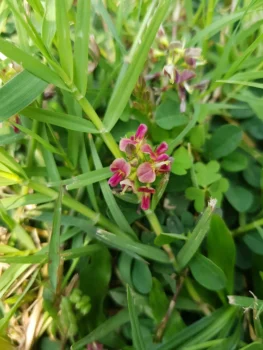
Alyce Clover: A Small but Mighty Legume for Warm Climate Gardens
If you’ve ever wondered about those tiny purple flowers popping up in Florida’s wild spaces, you might be looking at alyce clover (Alysicarpus ovalifolius). This diminutive legume has quietly made itself at home in the Sunshine State, bringing both benefits and considerations for gardeners to weigh.
What Exactly is Alyce Clover?
Alyce clover is a small herbaceous plant—what botanists call a forb—meaning it’s a non-woody flowering plant that stays relatively close to the ground. This little guy can behave as either an annual or short-lived perennial, depending on growing conditions. Don’t expect towering heights from this one; it’s more of a ground-hugger that spreads rather than reaches for the sky.
A Traveler from Afar
Here’s where things get interesting: alyce clover isn’t actually native to North America. This plant originally called tropical Africa and Asia home before making its way to our shores. Today, you’ll find it established and reproducing on its own primarily in Florida, where the warm climate suits its tropical origins perfectly.
- Species observed
- No observations
Should You Grow Alyce Clover?
The answer isn’t black and white. While alyce clover isn’t considered invasive or harmful, it’s also not contributing to native ecosystems in the way indigenous plants do. Here are some factors to consider:
Potential Benefits:
- Nitrogen-fixing abilities improve soil quality
- Low-maintenance ground cover option
- Attracts small pollinators with its tiny flowers
- Drought tolerant once established
- Self-seeding for natural spread
Things to Consider:
- Doesn’t support native wildlife as effectively as indigenous plants
- Limited geographic range (primarily Florida)
- May compete with native species for resources
Growing Alyce Clover Successfully
If you decide to give alyce clover a try, you’ll find it refreshingly easy to grow. This plant thrives in USDA hardiness zones 9-11, making it suitable only for the warmest parts of the country.
Ideal Growing Conditions:
- Full sun to partial shade
- Well-draining soil (it’s not picky about soil type)
- Regular watering during establishment, then drought tolerant
- Warm temperatures year-round
Care and Maintenance:
One of alyce clover’s biggest selling points is how little fuss it requires. Once established, it’s remarkably self-sufficient. The plant will often self-seed, creating natural colonies over time. No need for fancy fertilizers—as a legume, it actually improves soil nitrogen levels naturally.
Native Alternatives to Consider
While alyce clover has its merits, consider these native Florida alternatives that provide similar benefits while supporting local ecosystems:
- Partridge pea (Chamaecrista fasciculata) – another nitrogen-fixing legume
- Wild sensitive plant (Mimosa quadrivalvis) – native ground cover with similar growth habit
- Sunshine mimosa (Mimosa strigillosa) – beautiful pink flowers and native wildlife value
The Bottom Line
Alyce clover represents an interesting case study in introduced plants that have found their niche without causing obvious harm. While it’s not going to win any prizes for supporting native biodiversity, it’s also not the villain in your garden story. If you’re in Florida and looking for a low-maintenance ground cover that fixes nitrogen and attracts some pollinators, alyce clover could fit the bill. Just remember that choosing native alternatives will always give you more bang for your conservation buck while creating habitat that truly belongs in your local ecosystem.