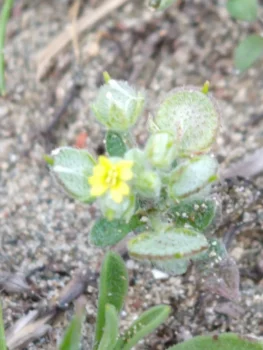
Alyssum: A Mediterranean Visitor in American Gardens
Meet Alyssum strigosum, a small annual flower that’s made its way from the Mediterranean to parts of the American West. While you might not find this particular species at your local garden center, understanding what it is and where it fits in the gardening world can help you make better choices for your landscape.
What Exactly Is Alyssum strigosum?
Alyssum strigosum belongs to the mustard family and is what botanists call a forb – essentially a non-woody flowering plant that completes its entire life cycle in one growing season. You might also see it listed under its synonym, Alyssum minus var. strigosum, which can make plant identification a bit like solving a puzzle!
This little annual produces the characteristic small, clustered flowers that make alyssum species recognizable, typically in white. Like other members of its family, it’s a relatively low-growing plant that spreads along the ground rather than reaching for the sky.
Where You’ll Find It Growing Wild
In the United States, Alyssum strigosum has established itself primarily in California and Nevada, where the Mediterranean-like climate suits its preferences. Originally from the Mediterranean region, this plant has adapted to similar dry, sunny conditions in the American Southwest.
- Species observed
- No observations
It’s worth noting that this species is considered non-native to North America. While it reproduces on its own in the wild without human intervention, its invasive status remains unclear – which means we’re still learning about its long-term impact on local ecosystems.
Should You Plant It in Your Garden?
Here’s where things get interesting. While Alyssum strigosum isn’t currently flagged as problematic, its non-native status and limited research make it a bit of a question mark for responsible gardeners. You probably won’t find it readily available at nurseries anyway, which might be nature’s way of making the decision easier!
Better Alternatives for Your Garden
If you’re drawn to small, clustered white flowers and low-growing annual plants, consider these native alternatives that will support local wildlife:
- White-flowered native mustards appropriate for your region
- Local wildflower mixes that include small white bloomers
- Native ground covers that provide similar aesthetic appeal
Growing Conditions (If You Encounter It)
Should you come across Alyssum strigosum or want to understand its needs, it likely prefers:
- Full sun exposure
- Well-draining soils
- Moderate water (typical of Mediterranean plants)
- Areas with mild, wet winters and dry summers
However, specific growing information for this species is quite limited, which is another reason to consider better-studied native alternatives.
The Bottom Line
While Alyssum strigosum isn’t necessarily harmful, it’s also not particularly beneficial to North American ecosystems. As gardeners, we have the opportunity to choose plants that not only look beautiful but also support local wildlife and contribute to biodiversity.
Instead of seeking out this Mediterranean transplant, why not explore the wonderful world of native plants in your area? You’ll likely find species with similar charm that butterflies, bees, and birds will thank you for. Plus, native plants are typically easier to grow once established, since they’re already adapted to your local conditions.
Remember: every plant choice is a vote for the kind of ecosystem you want to support right in your own backyard!