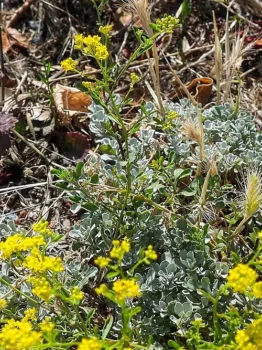
Alyssum corsicum: A Lesser-Known Perennial Worth Understanding
If you’ve stumbled across the name Alyssum corsicum in your gardening research, you’re likely wondering what exactly this plant is and whether it deserves a spot in your garden. While this perennial herb might sound intriguing, there’s quite a bit of mystery surrounding this particular species that’s worth exploring before you make any planting decisions.
What We Know About Alyssum corsicum
Alyssum corsicum is classified as a perennial forb herb, which simply means it’s a non-woody plant that comes back year after year. Like other forbs, it lacks the thick, woody stems you’d find on shrubs or trees, instead producing softer, more herbaceous growth that emerges from buds at or below ground level each growing season.
One thing we know for certain is that this isn’t a native North American plant. Alyssum corsicum has been introduced to the United States and has established itself in the wild, currently documented as reproducing spontaneously in Oregon without human intervention.
Geographic Distribution
Currently, Alyssum corsicum has been recorded growing in Oregon, where it has managed to establish itself as a naturalized species. Its limited documented range in North America suggests it’s either quite rare or perhaps not widely recognized by botanists and gardeners alike.
- Species observed
- No observations
The Challenge of Growing Lesser-Known Species
Here’s where things get a bit tricky for gardeners interested in Alyssum corsicum. While we know it’s a perennial herb that can survive in Oregon’s climate, many crucial details about its cultivation remain unclear. We don’t have reliable information about its preferred growing conditions, hardiness zones, mature size, or specific care requirements.
This lack of horticultural information presents several challenges:
- Difficulty sourcing seeds or plants from reputable nurseries
- Uncertainty about optimal planting locations and care
- Unknown potential for aggressive spreading or invasiveness
- Limited understanding of its ecological impacts
Consider Native Alternatives Instead
Given the uncertainties surrounding Alyssum corsicum and its non-native status, you might want to consider well-documented native alternatives that can provide reliable performance and ecological benefits. Native plants offer several advantages over introduced species:
- Proven adaptation to local climate and soil conditions
- Support for local wildlife and pollinators
- Extensive cultivation information available
- Readily available from native plant nurseries
If you’re drawn to low-growing perennial herbs, consider exploring native options in the mustard family (Brassicaceae, the same family as Alyssum species) or other native forbs that might offer similar garden appeal with better-understood growing requirements.
The Bottom Line
While Alyssum corsicum might spark curiosity among adventurous gardeners, its mysterious nature and non-native status make it a challenging choice for most home landscapes. The limited available information makes it difficult to grow successfully or predict its long-term behavior in the garden.
Instead of taking a gamble on this poorly-documented species, consider investing your gardening energy in native plants with proven track records. You’ll have better success, clearer growing guidance, and the satisfaction of supporting local ecosystems. After all, the best gardens are built on plants you can understand, grow confidently, and enjoy for years to come.